

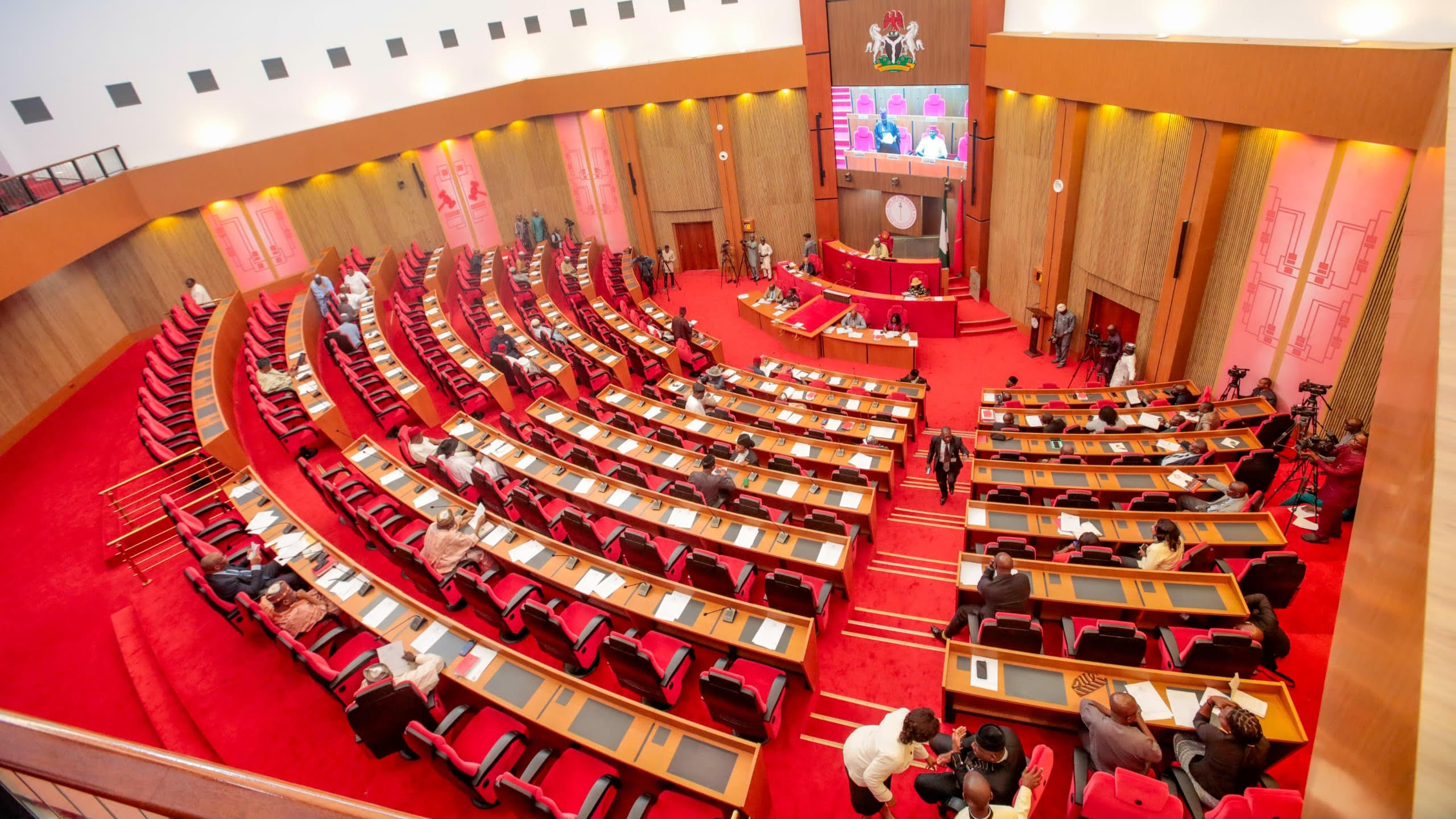
Human rights organisations numbered to be five, have urged the National Assembly and the Federal Government to withdraw the Foreign Aids (Regulation, Transparency and Disclosure) Bill, 2026 (SB. 1034), expressing concern that the proposed law could narrow civic space and hinder the activities of human rights defenders and civil society organisations.
The organisations include the Nigerian Human Rights Defenders Network (NHRDN), Partnership for Justice, Front Line Defenders (FLD), West African Human Rights Defenders Network (WAHRDN) and Protection International (PI).

In a joint statement released on Wednesday, the groups disclosed that the bill, sponsored by Senator Ibrahim Hassan Dankwambo (PDP, Gombe North), had passed its second reading in the Senate in July.
According to the organisations, the proposed legislation would create a Foreign Aid Regulatory Commission (FARC), granting it authority to register, inspect, audit, sanction, suspend or shut down organisations that receive foreign grants, donations or technical assistance.
They warned that the proposed regulatory system could have implications for independent civic organisations, human rights defenders, legal aid providers and humanitarian groups operating in Nigeria.
The groups maintained that the bill does not align with Nigeria’s commitments under the fourth cycle of the Universal Periodic Review (UPR), especially recommendations concerning the creation of a safe and enabling environment for human rights defenders and civil society organisations.
They further pointed out that Nigeria is seeking election to the United Nations Human Rights Council for the 2027-2029 term, arguing that the country’s bid should be supported by stronger domestic safeguards for human rights defenders.
The organisations identified a number of provisions in the bill that they said were particularly concerning.
They noted that Section 6(1), which mandates the registration of foreign aid within 30 days of its receipt, could pose challenges for emergency assistance, including legal defence, relocation support and assistance to survivors of rights violations.
They also expressed reservations about Sections 7 and 8, which require implementing partners and funded activities to be publicly disclosed through a national register.
According to the groups, making such information public could put human rights defenders, survivors, witnesses and people involved in sensitive documentation at risk of security threats.
They also raised concerns about Section 11, which requires activities financed with foreign funds to conform to Nigeria’s national development plans and priorities.
The organisations described the provision as overly broad, warning that it could potentially interfere with the work of groups focused on human rights, land and environmental rights, as well as organisations supporting vulnerable communities.
The groups also challenged the justification for establishing the proposed FARC, noting that some of its responsibilities could duplicate the functions of existing bodies such as the Corporate Affairs Commission (CAC), Special Control Unit Against Money Laundering (SCUML), Federal Inland Revenue Service (FIRS) and Nigerian Financial Intelligence Unit (NFIU).
They called on the Senate, its leadership and the Federal Government to withdraw the bill without delay.
The organisations further urged the authorities to ensure that any future legislation governing civic space and foreign funding is consistent with the Constitution, the UN Declaration on Human Rights Defenders and Nigeria’s international human rights obligations.
They called for civil society organisations and human rights defenders to be meaningfully consulted in the development of any future regulatory framework.
The groups also demanded clear legal safeguards for confidential information relating to human rights defenders, survivors, witnesses and other individuals at risk who receive assistance through foreign funding.
In addition, they called for the rapid establishment of a framework to facilitate emergency and protection-related funding, including legal, medical, psychosocial and relocation assistance for defenders facing risks.
They urged the government to reaffirm constitutional protections for freedom of association, expression and assembly.
While recognising the need for transparency and accountability in the management of foreign funding, the organisations stressed that regulatory measures must not become tools for limiting legitimate human rights activities.
They therefore called on the National Assembly to withdraw SB. 1034 and ensure that any future regulatory framework safeguards civic space and protects individuals and organisations engaged in human rights defence in Nigeria.
