

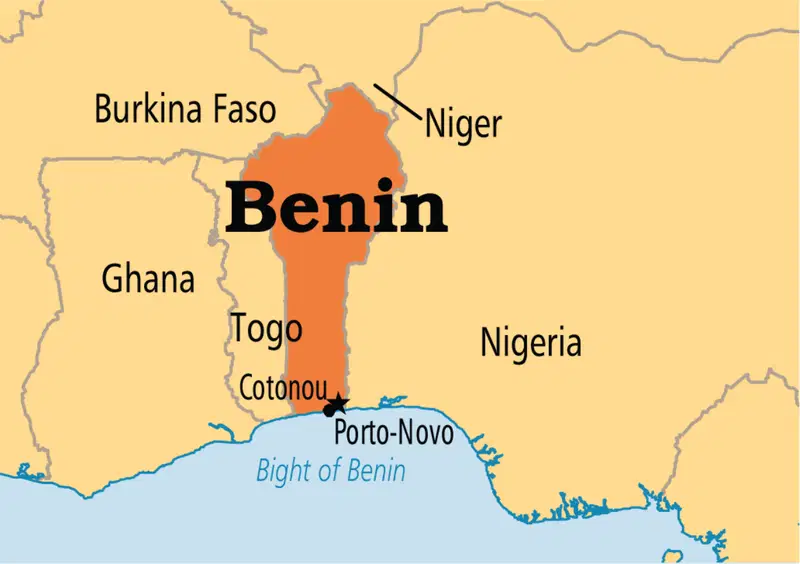
Niger Republic is seeking greater access to Nigerian ports as continued tensions with Benin Republic disrupt the movement of goods through one of its traditional trade corridors.
The development is particularly significant for Niger, which has no coastline and depends on neighbouring countries for access to international maritime trade.

Nigerien customs officials recently held discussions with the Nigeria Customs Service in Abuja as both countries explored ways to expand legitimate commercial activities between them.
The delegation from Niger’s Customs Service visited the Nigeria Customs Service headquarters last week, where officials discussed measures that could improve trade, increase revenue and support communities located along the border.
The Comptroller of Nigerien Customs in Dosso, Abdoulaye Vincent, stressed the need for stronger cooperation between the two customs agencies.
He said, “The insecurity along the Burkina Faso and Togo routes, as well as the prevailing diplomatic situation with Benin Republic, had disrupted trade. We therefore appealed for increased legitimate exports through Kamba to boost revenue and ease economic hardship for communities along the corridor and beyond.”
Niger has been searching for alternative routes as the security situation along some regional corridors worsens and its disagreement with Benin continues to affect commercial activities.
The relationship between the two countries deteriorated after the military takeover in Niger in July 2023. Niger’s military authorities accused Benin of supporting moves against the junta, an allegation rejected by Cotonou.
Tensions increased after Benin backed ECOWAS efforts to restore Mohamed Bazoum, Niger’s ousted president. In response, Niger closed its border with Benin.
Although ECOWAS later removed sanctions against Niger in February 2024, the border restrictions continued, creating difficulties for Niger’s economy and trade.
The closure has been particularly damaging because Niger traditionally depends on Benin’s Cotonou port to handle a substantial part of its international imports and exports.
The disagreement also spilled into the energy sector after Cotonou halted oil exports in 2024. Niger subsequently responded by shutting pipeline valves, further worsening economic relations.
Security cooperation along the border also suffered as the two countries exchanged accusations over the activities of armed groups operating in the region.
Relations deteriorated further following an attempted coup in Benin in December 2025. Niger was later linked by some Beninese to the incident, while Niger’s leadership subsequently made fresh allegations against Benin.
Following an Islamic State attack on an airport in Niamey, Nigerien leader Abdourahamane Tiani accused Benin’s former President Patrice Talon, French President Emmanuel Macron and Côte d’Ivoire’s President Alassane Ouattara of involvement. Tiani also alleged that Benin was being used as a rear base by terrorist groups.
The accusations added to the already strained relationship between the neighbouring countries.
Diplomatic tensions also resulted in the expulsion of officials. Benin removed an intelligence officer and a police officer attached to Niger’s embassy in Cotonou, after which Niger declared Benin’s first counsellor in Niamey persona non grata.
There are, however, signs that the relationship could improve following the change in leadership in Benin.
Romuald Wadagni, who assumed office as Benin’s president on May 24, 2026, has indicated an interest in restoring confidence and improving relations with Niger.
The prolonged restrictions have increasingly become a challenge for both countries, particularly because communities and businesses on either side depend heavily on cross-border trade.
While the new administration in Benin could create an opportunity for reconciliation, disagreements over Benin’s relationship with France remain a major obstacle.
In the meantime, Niger’s growing engagement with Nigeria offers the landlocked country another route for accessing international markets and reducing its dependence on the Benin corridor.
