

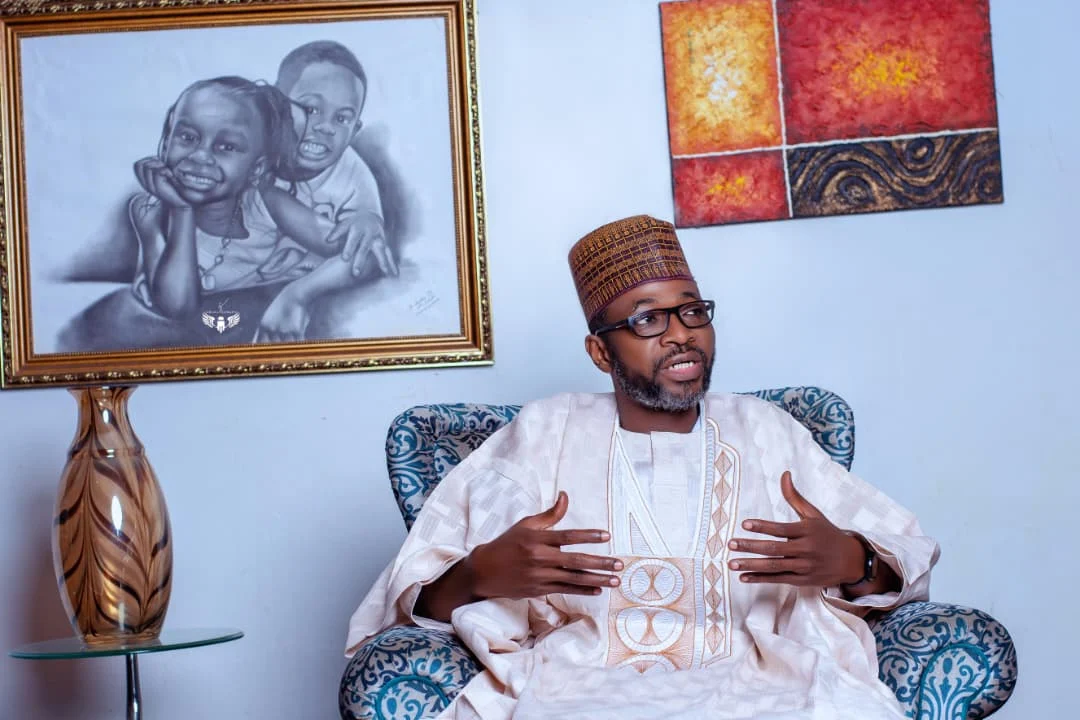
The New Nigeria People’s Party presidential candidate, Suleiman Dikwa, has urged the Federal Government to move past the decades-old fuel subsidy debate and channel public funds into investments that can create jobs, earn foreign exchange and develop productive assets.
Dikwa made the call in a statement titled, “Beyond the Subsidy Trap: Why the Atiku-Tinubu Debate Fails Nigeria’s Economic Future,” which was made available to our correspondent on Tuesday. He described President Bola Tinubu’s position on subsidy removal and former Vice President Atiku Abubakar’s proposal for a “redesigned subsidy” as “two sides of the same bankrupt coin.”

He maintained that neither removing subsidies without providing alternatives nor restoring petrol subsidies would solve Nigeria’s underlying economic challenges.
“While one equates reform with withdrawing public expenditure, the other equates relief with burning cash at retail fuel pumps; he said neither of the arguments builds the economy,” Dikwa stated.
According to him, Nigeria has depended on petrol subsidies for roughly four decades as a way of compensating for shortcomings in public infrastructure, especially in power, transportation and logistics.
Dikwa said, “Nigerians on the other hand are not debating whether to spend public money. It is debating what public money should create.”
The NNPP presidential candidate pointed to agricultural waste, food imports and poor utilisation of donor funds as some of the structural problems weakening the Nigerian economy.
He referenced the more than N12tn reportedly lost each year to pre- and post-harvest agricultural losses, substantial food import costs that consume foreign exchange on goods that could be produced domestically, and billions of dollars in donor funding that have not translated into sustainable industrial infrastructure.
“No functional industrial power in modern history developed through pure laissez-faire passivity or consumptive cash burn, rather, they deploy targeted subsidies to build global dominance, secure supply chains, and protect domestic purchasing power.”
Dikwa pointed to the United States, China and the European Union as examples of economies that have used targeted government support to boost domestic production.
He noted that the United States strengthened its agricultural sector through initiatives such as the 1933 Agricultural Adjustment Act and targeted Farm Bills, which provided support for grain storage, price stability and export financing.
He further explained that China’s leadership in electric vehicles was driven not by cheaper petrol prices but by government co-investment in battery research and development, critical mineral processing and manufacturing.
Dikwa also cited the European Union’s Common Agricultural Policy, which focuses on supporting rural cold chains, modernising processing facilities and ensuring export quality rather than subsidising retail bread.
“The global standard is not ‘no subsidy.’ The global standard is subsidy that creates surplus. Palliatives offer the illusion of intervention, just as fuel discounts offer the illusion of relief. Neither builds an economy,” he said.
He warned that Nigeria could not afford to remain trapped between what he described as “punitive austerity” and “refurbished price controls” as the country approaches the 2027 elections.
“A subsidy that fills a petrol tank disappears by evening. A subsidy that builds a processing hub, restores degraded land, or capitalises a community’s productive stock produces value for decades. The next Nigerian subsidy must be an investment, not a bill”, he concluded.
