

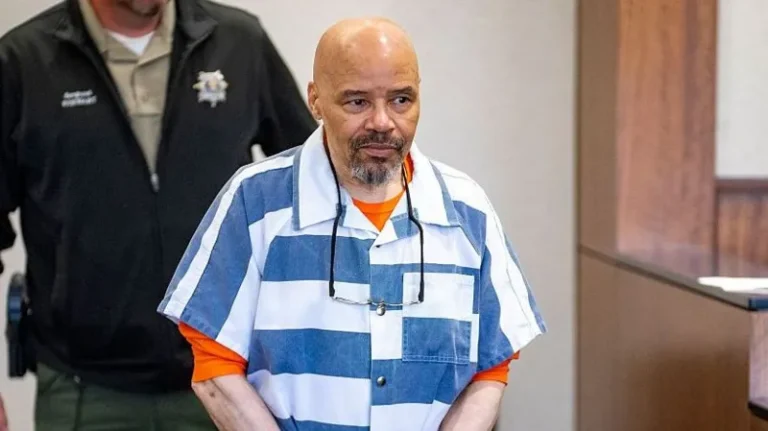
A 71-year-old man who spent 41 years on death row in the United States after being convicted of murdering a woman has been released on bail after newly analysed DNA evidence failed to link him to the crime.
Douglas Stewart Carter was convicted of killing Eva Olesen in Provo, Utah, in February 1985 and sentenced to death, despite insisting that he was innocent and that a confession he signed during police questioning had been obtained under coercion.

The BBC reported on Tuesday that the Utah Supreme Court ordered a retrial for Carter last year after finding that investigators had engaged in misconduct.
A judge granted Carter bail on Monday despite opposition from Olesen’s family. He has been ordered to wear a GPS monitoring device while awaiting the new trial.
Olesen, the aunt of a local police chief, was stabbed several times and shot in the back of the head at her home.
Carter, who is from Chicago, was living with his mother in Utah at the time. Court records indicated that police suspected him of killing Olesen during a robbery.
Carter later left Utah after believing he was wanted in connection with an unrelated case and was eventually arrested in Nashville, Tennessee, where he signed a confession during interrogation.
However, investigators found no physical evidence connecting him to the crime scene.
A jury convicted Carter based on his confession and testimony from two witnesses who claimed he had boasted about the killing.
In 2011, the two witnesses reportedly said they had been directed to lie in court, received money and gifts from police, and were threatened with deportation if they refused to testify against Carter.
Carter’s lawyers also argued that witnesses had seen a white man fleeing the scene and accused an investigator of withholding evidence that pointed to Olesen’s husband, Orla Olesen, as a possible suspect.
Orla Olesen, who died in 2009, told police that he discovered his wife dead inside their home.
The stab wounds were believed to have been inflicted with a knife from the couple’s kitchen, which was found close to Olesen’s body. The firearm used in the killing was never recovered.
Prosecutors said this month that DNA testing had ruled out Carter as a possible match to blood discovered on a doorknob and genetic material recovered from the handle of the knife.
Olesen’s family opposed Carter’s release.
Theresa Olesen, Eva Olesen’s daughter-in-law, told Monday’s bail hearing that the family had “serious concerns” about Carter being released and argued that he should remain in custody until the new trial.
“By golly we were hoping for a concrete match,” Olesen said of the DNA results. “It doesn’t mean he wasn’t there.”
Carter’s defence lawyer, Neal Hamilton, called for the case to be dismissed.
“If the state of Utah had their way, he would have been executed 15, 20 years ago before we discovered the misconduct,” he told Associated Press.