
Qatar PM calls Netanyahu ‘war criminal’, accuses Israel of war crimes in Gaza

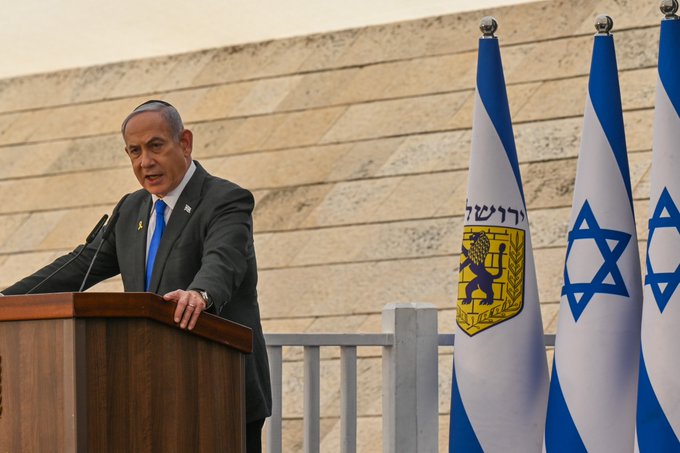
Qatar’s Prime Minister, Sheikh Mohammed bin Abdulrahman Al Thani, has described Israeli Prime Minister Benjamin Netanyahu as a “war criminal” over Israel’s military operations in Gaza.
Sheikh Mohammed made the remarks during an interview with British broadcaster Piers Morgan, saying actions carried out in Gaza amounted to war crimes and that those responsible should be regarded as war criminals.

The Qatari prime minister specifically named Netanyahu while discussing Israel’s military campaign in Gaza. He said attacks on hospitals and schools could not be justified under any circumstances.
Sheikh Mohammed also accused Netanyahu of attempting to divert attention from the situation in Gaza by targeting Qatar and influencing public opinion against the country’s role as a mediator.
He rejected allegations that Qatar had funded Hamas’ military activities, saying the country’s assistance was coordinated with international partners. He also dismissed claims that Doha had provided support to Hamas’ armed wing.
The Qatari leader maintained that his country’s mediation efforts remained centred on diplomacy and said Doha would continue pursuing peaceful solutions despite growing regional tensions.
Sheikh Mohammed also spoke about Qatar’s mediation efforts concerning the wider regional conflict, saying diplomacy and closed-door negotiations remained the most effective means of making progress.
He identified several issues that needed to be addressed to ease tensions, including Iran’s nuclear programme, freedom of navigation through the Strait of Hormuz and regional security arrangements.
The Qatari prime minister said any agreement concerning the Strait of Hormuz should comply with international law and include countries across the region.
He also called for dialogue between Iran and Gulf states to establish principles for good-neighbourly relations.
Despite escalating tensions in the region, Qatar has continued its diplomatic engagements and maintained that it would preserve its mediation role while seeking diplomatic solutions to regional confl