
[LEGENDS IN BUSINESS] Ngozi Okonjo-Iweala: Her life, career, achievements and legacy

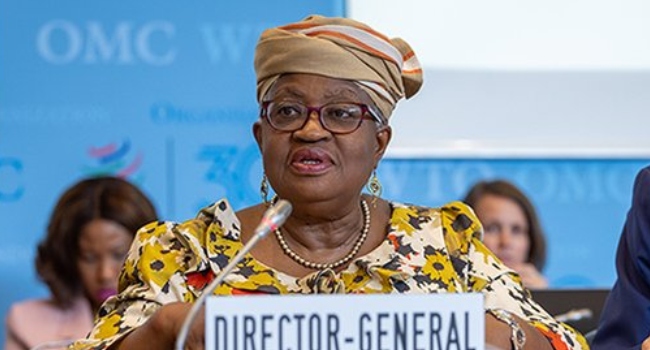
Ngozi Okonjo-Iweala is one of Nigeria’s most internationally recognised economists and public officials. She has worked at the highest levels of global economic policymaking, served twice as Nigeria’s Minister of Finance, held senior leadership positions at the World Bank and become the first woman and first African to lead the World Trade Organization (WTO).
Her career spans economic reform, international development, debt negotiations, anti-corruption initiatives, public finance and global trade.

As of October 2026, she remains the WTO’s Director-General, serving her second four-year term, which began on 1 September 2025.
1. Personal details at a glance
| Category | Details |
|---|---|
| Full name | Ngozi Okonjo-Iweala |
| Nationality | Nigerian |
| Profession | Economist, development expert and international public servant |
| Birthplace | Ogwashi-Uku, Delta State, Nigeria |
| Education | Harvard University and Massachusetts Institute of Technology (MIT) |
| Undergraduate degree | Economics, Harvard University |
| Doctorate | Regional Economics and Development, MIT |
| Current position | Director-General of the WTO |
| First appointed WTO Director-General | 2021 |
| Second term began | 1 September 2025 |
| Former Nigerian positions | Minister of Finance and briefly Minister of Foreign Affairs |
| Former international position | Managing Director at the World Bank |
| Husband | Dr Ikemba Iweala |
| Children | Four |
| Books | Author and co-author of several books on economics, governance, corruption and leadership |
The WTO’s official biography confirms her academic qualifications, government appointments and international career.
2. Early life and family background
Ngozi Okonjo-Iweala was born in Ogwashi-Uku, in present-day Delta State, Nigeria, into an academically accomplished family.
Her parents were Professor Chukwuka Okonjo and Professor Kamene Okonjo. Her father was a distinguished academic and traditional ruler, while her mother was a respected sociologist and advocate for women’s rights.
Growing up in an environment that valued education, scholarship and public service helped shape her interest in economics and development.
Her family background also connected her to the traditional and cultural life of Ogwashi-Uku in Delta State.
Her mother, Professor Kamene Okonjo
Her mother, Professor Kamene Okonjo, was a distinguished academic whose work included sociology, women’s empowerment and advocacy for women’s rights.
Professor Kamene Okonjo died on 23 October 2026 at the age of 96, according to reports published in the Nigerian media. Her death was followed by tributes from public officials and members of the academic community.
Her mother’s academic career and commitment to public service formed an important part of the family’s legacy.
3. Educational background
Okonjo-Iweala received much of her higher education in the United States, attending two of the world’s best-known universities.
Harvard University
She studied economics at Harvard University, graduating magna cum laude in 1977.
The Latin expression magna cum laude means graduating with great distinction.
Her economics education provided a foundation for her later work in international development, fiscal policy and economic reform.
Massachusetts Institute of Technology
She subsequently attended the Massachusetts Institute of Technology, where she earned a PhD in Regional Economics and Development in 1981.
Her doctoral training equipped her to study how economic policies, investment and development strategies affect countries and regions.
These qualifications helped establish her professional path in international economic development.
4. Her career at the World Bank
Before becoming a prominent figure in Nigerian politics, Okonjo-Iweala built a long career at the World Bank.
She worked at the institution for approximately 25 years, specialising in economic development, poverty reduction, financial management and development policy.
She rose to the position of Managing Director, Operations, one of the bank’s most senior leadership roles.
What did she do at the World Bank?
Her responsibilities included:
- Overseeing development programmes across Africa, South Asia, Europe and Central Asia.
- Supporting economic reforms and development financing in low-income countries.
- Working on initiatives to address the effects of international financial crises.
- Helping mobilise funding for development programmes.
- Contributing to policies designed to reduce poverty and support economic growth.
According to her official biography, she had oversight responsibility for an operational portfolio worth approximately $81 billion during her time as managing director.
Her attempt to become World Bank president
In 2012, Okonjo-Iweala contested for the presidency of the World Bank Group.
She was the first woman from Africa to contest for the position. However, she did not win; South Korea-born American economist Jim Yong Kim was selected.
Her candidacy was nevertheless significant because it brought greater international attention to calls for more representation of developing countries in the leadership of global financial institutions.
5. Her time as Nigeria’s Finance Minister
Okonjo-Iweala served as Nigeria’s Minister of Finance under two administrations.
- 2003–2006: President Olusegun Obasanjo’s administration.
- 2011–2015: President Goodluck Jonathan’s administration.
She was the first woman to hold the finance minister position in Nigeria.
Her tenure involved major debates and decisions concerning government spending, public debt, economic reforms, transparency and national development.
A. Nigeria’s historic debt relief
One of her best-known achievements was her role in negotiating Nigeria’s debt-relief agreement with the Paris Club of creditor nations in 2005.
At the time, Nigeria faced a substantial external debt burden, with a significant portion owed to Paris Club members.
Under the agreement:
- Approximately $18 billion in debt was cancelled.
- The overall debt-relief package was worth about $30 billion.
- Nigeria completed a settlement that eliminated its remaining Paris Club debt.
The agreement reduced the country’s external debt burden and created greater room for government spending on other priorities.
Her role in the negotiations remains one of the most widely recognised achievements of her public career.
However, debt relief did not automatically resolve Nigeria’s structural economic challenges. The long-term benefits depended on how the government managed public finances, invested the savings and pursued sustainable economic policies.
B. Improving transparency in public finance
During her second tenure as finance minister, Okonjo-Iweala supported reforms designed to improve the management and monitoring of government finances.
These included:
Treasury Single Account (TSA): A system intended to consolidate government cash balances and improve oversight of public funds.
Integrated Personnel and Payroll Information System (IPPIS): A platform intended to improve public-sector payroll management and reduce irregularities.
Government financial management reforms: Measures designed to improve the recording, monitoring and accountability of government expenditure.
The objective was to strengthen public financial management and reduce opportunities for waste and financial abuse.
It is important to distinguish between introducing or expanding a reform and proving that it eliminated corruption. These systems can strengthen accountability, but their effectiveness depends on implementation, monitoring and enforcement.
C. Nigeria’s first sovereign credit rating
During her first tenure, Nigeria obtained sovereign credit ratings from international rating agencies.
Such ratings provide investors with an assessment of a country’s ability to meet its debt obligations.
A sovereign rating can help a country access international capital markets, although the terms and cost of borrowing depend on several economic and financial factors.
D. Economic growth and reform
Okonjo-Iweala was associated with reforms intended to stabilise Nigeria’s macroeconomic environment, improve fiscal management and encourage investment.
These policies were part of wider efforts by the administrations she served to manage government revenue, strengthen institutions and improve the business environment.
However, Nigeria continued to face major problems, including unemployment, poverty, inadequate infrastructure and dependence on oil revenue.
Her record should therefore be understood in the context of both the reforms pursued and the broader economic challenges that remained.
6. Was she ever Nigeria’s Foreign Affairs Minister?
Yes.
In 2006, Okonjo-Iweala briefly served as Nigeria’s Minister of Foreign Affairs, making her the first woman to hold that position.
Her appointment came during President Obasanjo’s administration.
Although she is more widely associated with finance and economic policy, the foreign affairs role gave her experience in diplomacy and international relations.
Her career subsequently returned to international development and economic policy.
7. How she became WTO Director-General
The World Trade Organization is responsible for administering global trade agreements, providing a forum for trade negotiations and helping resolve trade disputes between member economies.
In 2020, Okonjo-Iweala entered the race to become its Director-General.
Her selection process attracted international attention because she was seeking to lead an organisation central to global commerce at a time of economic uncertainty and disruption to international supply chains.
On 15 February 2021, WTO members selected her as the organisation’s seventh Director-General.
She took office on 1 March 2021, becoming:
- The first woman to lead the WTO.
- The first African to hold the position.
- One of the most prominent Africans to lead a major global economic institution.
In November 2024, WTO members agreed to reappoint her for a second four-year term beginning on 1 September 2025. World Trade Organization
What does the WTO Director-General do?
The Director-General oversees the WTO Secretariat and helps facilitate the organisation’s work.
The role includes:
- Supporting negotiations among member countries.
- Facilitating discussions on trade rules and reforms.
- Helping members address disagreements over trade policy.
- Promoting cooperation within the multilateral trading system.
- Representing the organisation in international economic discussions.
The Director-General does not independently determine every WTO rule or impose trade policies on member countries. Decisions are made by WTO members through the organisation’s established processes.
8. Her priorities as WTO Director-General
Okonjo-Iweala has consistently argued that international trade can support economic growth, job creation and poverty reduction.
Her work has focused on several broad priorities.
A. Reforming the WTO
The WTO faces challenges involving trade disputes, negotiations, decision-making and the need to adapt its rules to changes in the global economy.
In October 2026, she highlighted concerns about the pace of negotiations and urged members to make progress on outstanding issues alongside institutional reform.
B. Supporting developing countries
She has emphasised the need for developing economies, including African countries, to benefit more fully from international trade.
This includes improving access to markets, strengthening productive capacity and helping smaller economies participate in global value chains.
C. Digital trade and technological change
Digital services, online commerce and new technologies are changing how businesses trade internationally.
WTO discussions under her leadership have included the need to address these developments within the evolving global trade framework.
D. Helping small businesses access finance
In October 2026, she participated in discussions on expanding supply-chain finance in developing economies.
The initiative examined ways to help businesses, particularly small and medium-sized enterprises, obtain the financing needed to participate in international trade.
The WTO and its partners have been exploring how financial institutions, digital platforms and regulatory improvements can help address funding gaps.
E. Making global trade more inclusive
Her broader approach recognises that trade does not benefit every country, industry or worker equally.
Countries need infrastructure, skilled workers, access to finance and productive industries to turn international trade opportunities into broad-based economic gains.
For Nigeria, this is particularly relevant to efforts to diversify the economy beyond crude oil.
9. Her books and publications
Okonjo-Iweala is also an author whose work examines Nigeria’s economic challenges, public-sector reform, corruption and leadership.
Some of her notable books include:
Reforming the UnReformable: Lessons from Nigeria (2012)
The book examines attempts to implement institutional and economic reforms in Nigeria.
It discusses the difficulties of changing established systems, overcoming resistance and improving government performance.
Fighting Corruption Is Dangerous: The Story Behind the Headlines (2018)
This book explores the challenges of confronting corruption and vested interests in public life.
It draws on her experiences in government and examines the risks faced by people who challenge entrenched practices.
Women and Leadership: Real Lives, Real Lessons (2020)
Co-authored with former Australian Prime Minister Julia Gillard, the book explores women’s leadership experiences and the barriers women encounter in positions of influence.
The Debt Trap in Nigeria: Towards a Sustainable Debt Strategy (2003)
This book examines Nigeria’s public debt challenges and the importance of developing a sustainable approach to debt management.
Her publications provide additional insight into her views on governance, development and institutional reform.
10. Awards and international recognition
Over the years, Okonjo-Iweala has received numerous awards and honours in recognition of her work in economic development, public service and international leadership.
Among the most notable are:
- TIME 100: Named among TIME magazine’s most influential people in the world in 2014 and 2021.
- Forbes recognition: Repeatedly included among the world’s most powerful women.
- Global Economy Prize: Received in 2023 from the Kiel Institute for the World Economy.
- American Academy of Arts and Sciences: Elected in 2019.
- Grand Commander of the Order of the Niger (GCON): Nigeria’s second-highest national honour, conferred in 2022.
- Global Leadership Award: Received from the American Academy of Achievement in 2022.
- Lord Byron International Prize: Received in 2023.
- Finance Minister of the Year: Recognised by international financial publications during her years in government.
Her honours reflect recognition from academic institutions, international organisations, governments and media outlets.
11. Her husband and children
Okonjo-Iweala is married to Dr Ikemba Iweala, a neurosurgeon.
They have four children and five grandchildren, according to her official biography.
She generally keeps her family’s private life separate from her public responsibilities.
Her family background is also linked to a long tradition of scholarship and professional achievement.
12. Is Ngozi Okonjo-Iweala wealthy? What is her net worth?
Okonjo-Iweala has held senior positions at the World Bank, served as a Nigerian cabinet minister, led an international organisation and undertaken work with global institutions.
These roles have placed her among internationally prominent economic professionals.
However, there is no independently verified public figure that I can confidently give as her current net worth as of October 2026.
Figures circulated by celebrity-net-worth websites and other online sources should not automatically be treated as accurate. Her personal wealth cannot be reliably calculated from her professional positions alone.
It is also important to distinguish her personal wealth from the budgets, assets and financial portfolios she oversaw while working at the World Bank or in government.
13. Controversies and criticisms
Like other senior public officials, Okonjo-Iweala’s policy decisions and public service have attracted both praise and criticism.
A balanced assessment should distinguish documented events, policy disagreements and allegations from established findings.
Economic reform debates
Some economic policies associated with her time in government, including fiscal reforms and changes affecting the management of public resources, were debated by Nigerians with differing views on their effects.
Supporters have highlighted debt relief and improvements in public financial management. Critics have questioned whether the reforms delivered sufficient benefits to ordinary Nigerians or adequately addressed poverty, unemployment and the cost of living.
These are questions about policy outcomes and implementation that should be assessed using economic evidence rather than personal attacks.
The limits of economic reform
Even when a government improves its debt position or introduces new financial controls, those measures do not automatically produce better living standards.
The results depend on wider factors such as employment opportunities, inflation, public services, infrastructure, productivity and how government revenue is spent.
Consequently, her record as finance minister is best assessed by examining specific policies, measurable outcomes and the broader conditions in Nigeria at the time.
Her role at the WTO
As Director-General, she must work with member countries that have different economic interests and political priorities.
Disagreements over tariffs, agricultural trade, subsidies, digital commerce and dispute settlement can limit how quickly the organisation reaches agreements.
Such difficulties are institutional challenges and should not automatically be attributed to one individual.
14. Other organisations and initiatives she has been associated with
Beyond her government and WTO positions, Okonjo-Iweala has worked with several international institutions and development initiatives.
These include:
- Gavi, the Vaccine Alliance: She previously chaired its board.
- African Risk Capacity: She previously chaired its board.
- Centre for the Study of the Economies of Africa: She founded this research institution.
- NOI Polls: She founded Nigeria’s first indigenous opinion-polling organisation.
- Brookings Institution: She has been affiliated with the institution as a distinguished visiting fellow.
- Global Commission on the Economics of Water: She has served as co-chair.
These activities reflect her continuing interest in economic research, development finance, public policy and international cooperation. Brookings
15. Her influence on Nigeria and Africa
Okonjo-Iweala’s career has significance beyond her individual achievements.
Representation in global institutions
Her appointment as WTO Director-General broke two longstanding barriers: no woman and no African had previously held the position.
Her leadership has therefore become an important milestone in discussions about representation in international institutions.
Economic policy and public debt
Her work on Nigeria’s debt negotiations demonstrated how international financial agreements can affect a country’s fiscal position.
It also highlighted the importance of negotiations between debtor countries and international creditors.
Women’s leadership
Her career has made her a prominent example in discussions about women’s participation in economic policymaking and international leadership.
African participation in global trade
Her position at the WTO gives her a central role in facilitating discussions about international trade rules that affect African countries.
However, the benefits countries receive from the global trading system depend on their own policies, productive capacity, infrastructure and ability to negotiate and implement trade agreements.
16. What is she doing now? Latest developments in 2026
As of 30 October 2026, Okonjo-Iweala remains in her second term as WTO Director-General.
Recent developments include:
- 1 October 2026: She highlighted the relatively slow pace of WTO negotiations and urged members to make progress on outstanding trade issues while pursuing institutional reform. World Trade Organization
- 16 October 2026: She participated in a meeting on supply-chain finance, focusing on improving access to trade finance for businesses in developing economies. World Trade Organization
- 23 October 2026: Her mother, Professor Kamene Okonjo, died at the age of 96, according to Nigerian media reports.
For verified updates on her official activities, speeches and policy positions, consult the World Trade Organization’s official website and her official website.
17. Ten interesting facts about Ngozi Okonjo-Iweala
- She is Nigerian and comes from Ogwashi-Uku in Delta State.
- She graduated from Harvard University with distinction in economics.
- She earned her doctorate at MIT.
- She worked at the World Bank for approximately 25 years.
- She served twice as Nigeria’s Minister of Finance.
- She briefly served as Nigeria’s Minister of Foreign Affairs in 2006.
- She played a leading role in negotiations that secured $30 billion in debt relief for Nigeria, including $18 billion in outright cancellation.
- She became the first woman and first African to lead the WTO in 2021.
- She is the author and co-author of several books on economics, corruption, leadership and development.
- She began her second four-year term as WTO Director-General on 1 September 2025.
Conclusion
Ngozi Okonjo-Iweala’s career combines academic achievement, economic policymaking, international development and global leadership.
Her most prominent accomplishments include negotiating Nigeria’s historic Paris Club debt relief, serving as a senior World Bank official and becoming the first woman and first African to lead the WTO.
Her record also raises important questions about the challenges of implementing economic reforms, reducing poverty and ensuring that international trade benefits developing countries.
Her legacy will ultimately be assessed not only by the positions she has held and the awards she has received, but also by the lasting effects of the policies and institutions she has helped shape.