

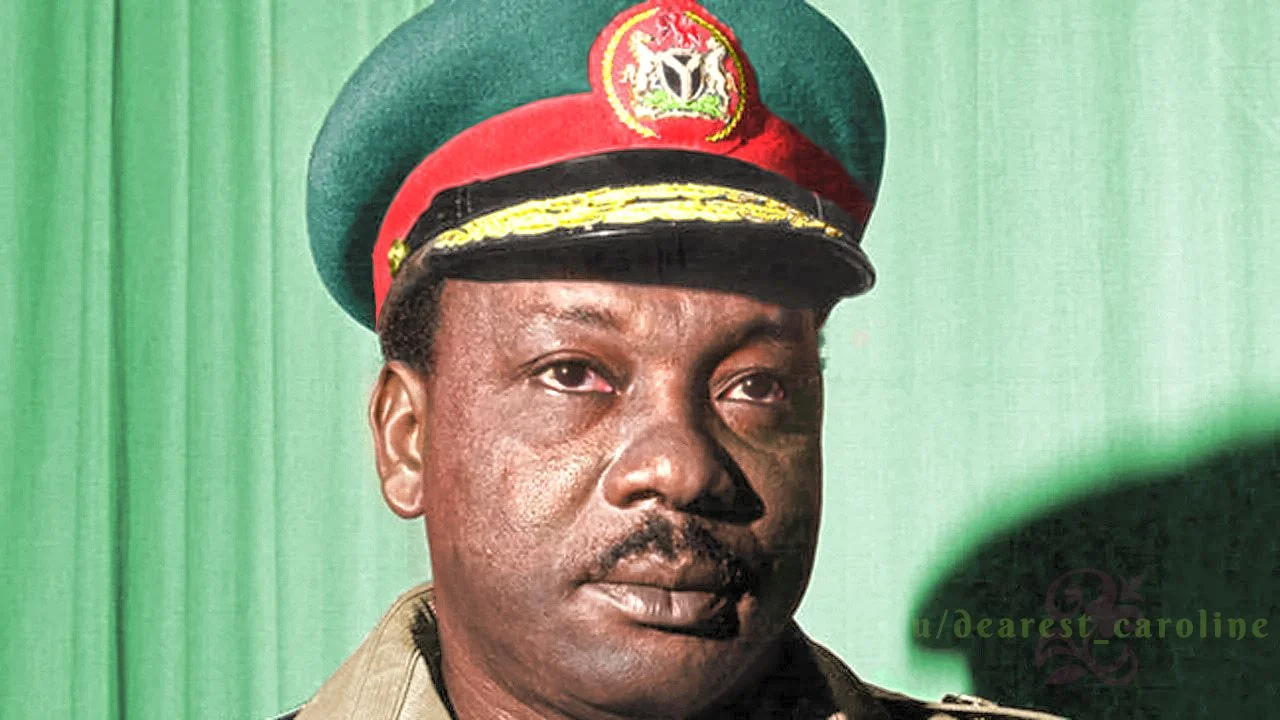
Nearly 60 years after the July 1966 counter-coup, the family of Nigeria’s first military Head of State, Johnson Aguiyi-Ironsi, has urged the Federal Government to apologise for his death, compensate the family and pursue genuine reconciliation.
Speaking during an interview with Arise News, the head of the family, Imo Aguiyi-Ironsi, said the late military leader deserved justice because he was killed despite having no involvement in the January 1966 coup.

“I think the family needs apology. The family needs to be compensated. We need sincere apology. We need sincere reconciliation,” he said.
He described his uncle as a nationalist who worked for the unity of the country and was unfairly blamed for events he did not participate in.
“He was a man of vision. He was a detribalized Nigerian. He was a good leader,” he added.
Imo said Aguiyi-Ironsi served as Head of State for just six months before his life was cut short, insisting he paid the ultimate price for circumstances beyond his control.
“He occupied the seat of head of state for only six months, and he was taken away from us.
“Not because of a sin he committed, because he wasn’t part of the January 1966 coup.”
He maintained that the former Head of State’s innocence regarding the coup is well known.
“Everybody knows that,” he said.
According to him, Aguiyi-Ironsi only assumed leadership because he was the most senior military officer after the coup, a decision that ultimately led to his death.
“Only because of his position as the most senior military officer, he was told to take charge. And then that cost him his life,” he stated.
He expressed optimism that government officials would consider the family’s appeal.
“Well, I hope there are people who are in positions to make this happen that are listening to you tonight,” he said.
Aguiyi-Ironsi became Nigeria’s Head of State in January 1966 after the country’s first military coup. Although he restored order after the uprising, his administration faced growing opposition, particularly following the introduction of Decree 34 and criticism over the handling of the coup plotters.
He was assassinated on July 29, 1966, alongside his host, Lieutenant Colonel Adekunle Fajuyi, during the counter-coup led by northern military officers.
