

A retired Major General and former commander of Operation Safe Haven, Henry Ayoola, has rejected claims that soldiers buying personal military gear reflects a failure within Nigeria’s armed forces.
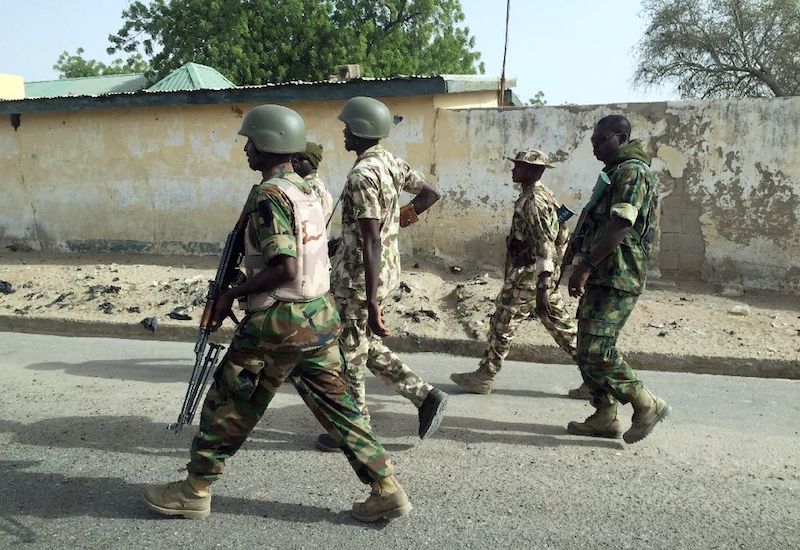
Speaking on Channels Television’s Morning Brief, Ayoola addressed the controversy triggered by allegations from a dismissed soldier, Rotimi Olamilekan, popularly known as Soja Boi. In a viral interview, Olamilekan claimed troops purchase their own uniforms, boots, and protective gear despite earning low wages.

The Nigerian Army had earlier denied the allegations, maintaining that providing equipment is its responsibility and insisting that no personnel is sent to operations without proper gear. It also clarified that Olamilekan was dismissed for repeated indiscipline, not for speaking out.
Backing the Army’s stance, Ayoola argued that it is normal for soldiers to upgrade their equipment voluntarily.
“The idea of a soldier, out of personal choice, spending money to improve their kit beyond the standard issue should not be a big deal,” he said.
He stressed that such actions do not imply failure on the part of the military authorities.
“It does not mean the system is not working. There is a standard kit that the Armed Forces provide, and that has not changed,” he argued.
According to him, every soldier is entitled to a minimum level of equipment under what is known as a “full-service matching order”.
“There is a minimum standard of kit that every soldier must be given. It is not true to say that authorities are not kitting soldiers,” he added.
While acknowledging that operational challenges can affect equipment availability, Ayoola said commanders adapt by managing resources effectively.
“When equipment is limited, it is rationalised. There is innovation, and sometimes troops make do with what is available,” he said.
He also broadened the discussion, arguing that Nigeria’s insecurity should not be viewed purely as a military issue but as a deeper structural and political challenge.
“What we are dealing with in Nigeria is not just a security challenge. The adversary has shaped a narrative that we have come to accept without properly interrogating it,” he said.
Describing the crisis as rooted in power struggles and competing ideologies, he added:
“The real issue is a political power problem. The Nigerian situation is a local manifestation of a global trend, a clash of civilisations,” Ayoola stated.
He criticised the country’s approach to security, noting that failure to properly define the problem has hindered effective solutions.
“You cannot solve a problem you have not defined. What we have been doing is like cutting branches without uprooting the tree,” he said.
On troop safety, Ayoola highlighted increased use of modern surveillance tools to reduce ambush risks.
“There has been increased use of ISR — Intelligence, Surveillance, and Reconnaissance — drones to cover flanks and move ahead of troops, which helps minimise ambushes,” he said.
He concluded by warning that without clearly identifying the nation’s enemies and their motives, security efforts would remain ineffective.
“If we cannot clearly define who the enemy is and what they want, then we will continue chasing shadows,” he said.
