

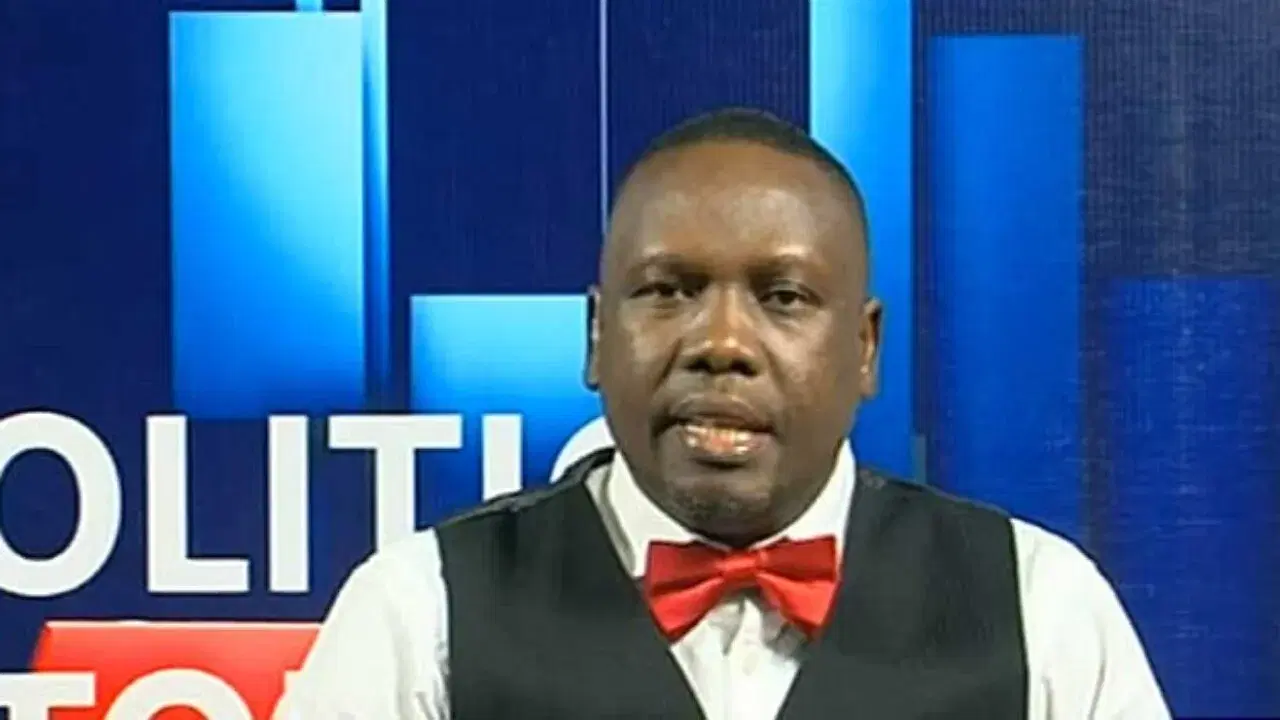
The special adviser to President Bola Tinubu on policy communication, says the federal government does not engage in negotiations with terrorists.
During an appearance on ‘The Morning Brief’ on Channels Television, Bwala noted that Nigeria’s complex security challenges sometimes compel governments to make tough choices.

He recalled that “there was a time the federal government was negotiating (with terrorists)”, citing comments by el-Rufai, the former Kaduna governor, about a past national policy that allowed both federal and state authorities to consider negotiation when necessary.
He explained that if citizens’ lives are at risk and negotiation becomes the only option to save them, leaders may feel obligated to take that route.
However, Bwala said President Tinubu adopted a zero-tolerance stance on negotiation, as such engagements risk contributing to terrorism financing.
According to him, ransom payments end up strengthening terrorists because “they also use the ransom money to buy more weapons”.
He stressed that this is why “the federal government does not tolerate the idea of negotiation”.
‘NOT ALL NEGOTIATIONS INVOLVE MONEY’
Commenting on the release of schoolchildren recently abducted in the northern region, Bwala said several factors — beyond ransom — can influence kidnappers to free their victims.
He said abductors may release captives if they fear that holding them longer could invite overwhelming force or endanger them further.
He added that respected intermediaries, such as clerics, can also influence outcomes.
Bwala said security agencies sometimes use intelligence pressure — such as warning signals or tactical encirclement — to prompt abductors into releasing victims without paying money.
He acknowledged that some families and state governments still end up paying ransom.
The presidential aide insisted that the federal government did not pay for the release of the Kebbi schoolgirls, nor does it plan to pay abductors in future cases.
Reacting to claims made by terrorists in a circulating video, Bwala described the statements as mere propaganda meant to frighten Nigerians, arguing that the abductors have offered no proof such as “how much they collect” or “who they collected from”.
He said restoring public trust will take time since the insecurity challenges “were inherited by this government”, but maintained that the administration remains focused on addressing the crisis, adding that “our eye is on the ball”.