

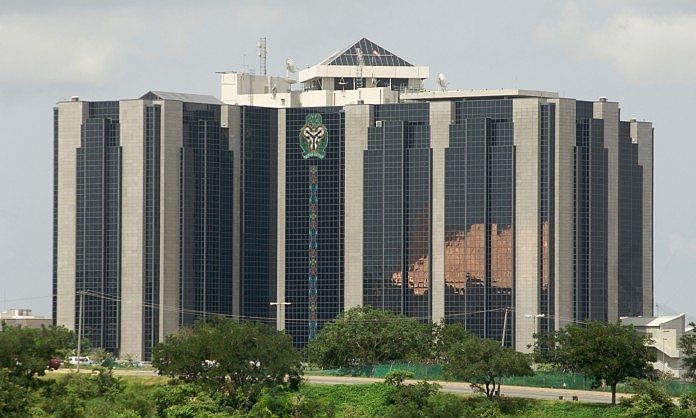
The Central Bank of Nigeria (CBN) has introduced new cash withdrawal regulations set to take effect in January 2026.
According to the announcement, the revision ends the previous special approval that allowed individuals to withdraw ₦5 million and corporates ₦10 million once a month.

The bank said earlier cash policies were implemented to address changing conditions, but current realities now require a more streamlined approach.
In a circular issued on Tuesday, December 2, 2025, and signed by Dr. Rita I. Sike, Director of the Financial Policy & Regulation Department, the CBN noted that the updated policy aims to cut cash management costs, improve security, and reduce money laundering risks linked to the economy’s dependence on physical cash.
The CBN explained that “these policies, issued over the years in response to evolving circumstances in cash management, sought to reduce cash usage and encourage accelerated adoption of other payment options… With the effluxion of time, the need has arisen to streamline the provisions of these policies to reflect present-day realities.”
Beginning January 1, 2026, individuals may withdraw up to ₦500,000 weekly across all channels, while corporate organisations will be allowed withdrawals of up to ₦5 million.
Withdrawals exceeding these limits will attract excess withdrawal fees of three percent for individuals and five percent for corporates, with the charges shared between the CBN and financial institutions.
Daily ATM withdrawals will be restricted to ₦100,000 per customer, with a weekly maximum of ₦500,000. These amounts will count toward the weekly withdrawal cap.
The apex bank also confirmed that ATMs may now dispense all currency denominations, while the over-the-counter encashment limit for third-party cheques remains at ₦100,000 — also included in the weekly limit.
Deposit Money Banks must submit monthly reports on withdrawals exceeding the set limits as well as on cash deposits. They are also required to maintain dedicated accounts for storing processing fees collected from excess withdrawals.
Revenue accounts of federal, state, and local governments, alongside accounts belonging to microfinance and primary mortgage banks, will not be affected by the revised limits or the associated fees.
However, exemptions previously granted to embassies, diplomatic missions, and aid-donor agencies have been removed.
The CBN added that the circular does not invalidate certain earlier directives but overrides others, as listed in its appendices.