

The Katsina State Emergency Management Agency, the Katsina State Bureau of Statistics, and the United Nations Children’s Fund (UNICEF) have begun a three-day stakeholder workshop aimed at strengthening flood preparedness and cholera response measures ahead of the 2026 rainy season.
The workshop, which brought together representatives from all 34 Local Government Area Emergency Management Committees, government ministries, development partners, as well as traditional and religious leaders, was held in Kano.

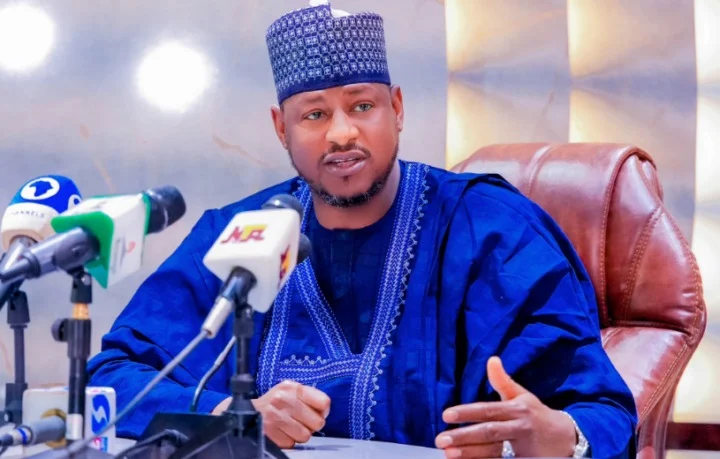
Declaring the event open, the Statistician-General of Katsina State, Prof. Saifullahi Ibrahim, urged stakeholders to adopt proactive strategies rather than wait for disasters to occur.
“Though our venue is Kano, our mission is Katsina. The rains are already starting across the North. We cannot afford to wait for disaster before we act,” he said.
He noted that flood and cholera responses must be coordinated across sectors, stressing that health, environment, water, and budgeting agencies must work together for effective outcomes.
Ibrahim added that the 2026 Seasonal Outlook by the National Inland Waterways Authority had identified several LGAs in Katsina as high-risk areas due to anticipated rainfall and river discharge patterns.
He also highlighted data from the state’s 2025 WASH Survey, which showed that 38% of rural households still depend on unprotected wells and surface water, increasing their vulnerability to cholera outbreaks following floods.
According to him, historical records from the Nigeria Centre for Disease Control and the State Ministry of Health show that cholera cases typically rise within two to four weeks after major flooding events.
“The data is not predicting if. It is telling us ‘where’ and ‘when’. These three days must be used to decide ‘how’ we will respond,” he said.
Ibrahim further announced plans to produce a 2026 Flood and Cholera Vulnerability Atlas, alongside a cross-sectoral early warning dashboard and a post-season impact assessment report.
Earlier, the State Executive Secretary of SEMA, Binta Dangani, said the workshop was timely, noting that flooding continues to threaten lives, livelihoods, and infrastructure across the state.
She said the expected outcome of the engagement is a strategic preparedness plan to improve the state’s capacity to anticipate, prevent, mitigate, and respond to flood emergencies.
Flooding remains a recurring challenge in parts of northern Nigeria, often driven by heavy rainfall, poor drainage systems, and rising water levels, leading to displacement, destruction of farmland, and loss of property.
