

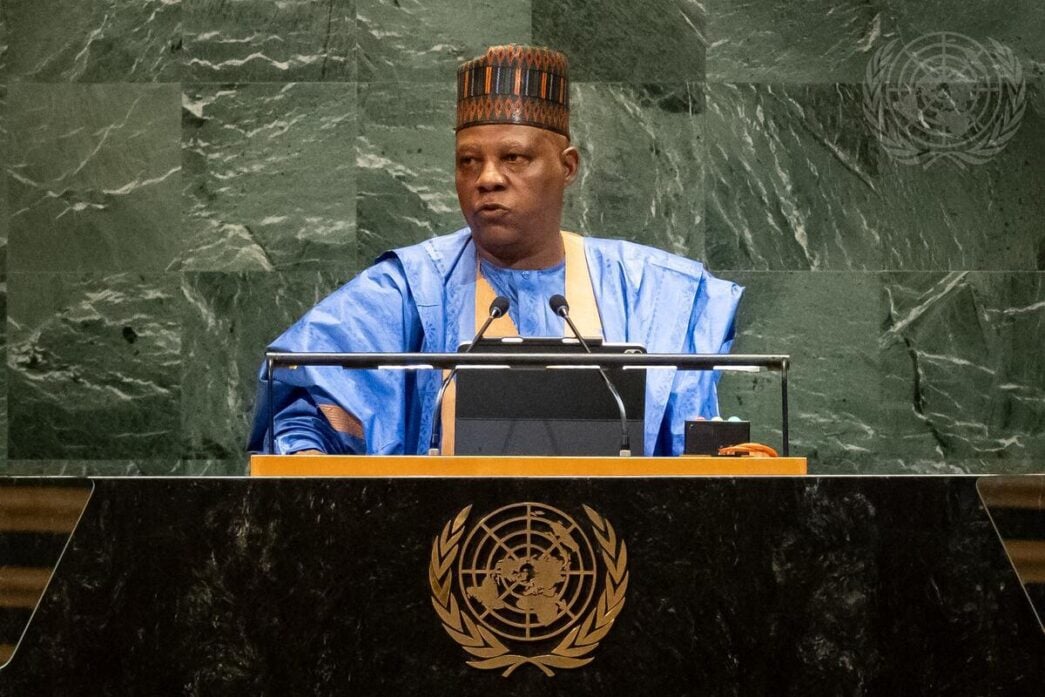
Vice President Kashim Shettima says Lagos state, not Kano, produced Africa’s richest man, Aliko Dangote, and its second richest man, Abdul Samad Rabiu, emphasising that Nigeria’s commercial capital remains the continent’s most powerful wealth hub.
Speaking on Monday at the opening ceremony of the Invest Lagos 3.0 summit held in Lagos, Shettima said Lagos’ economic ecosystem played a decisive role in the rise of Africa’s wealthiest individuals.

“It was Lagos that gave Africa its richest man, not Kano. Aliko Dangote is a Lagos man. Again, it was not Kano, but Lagos that gave Africa its second richest man, Abdulsamad Ishaq Rabiu,” the VP said.
He said Lagos accounts for about 30 percent of Nigeria’s GDP, describing it as the country’s dominant economic centre.
“Of the nine unicorns in Africa, five are based in Nigeria, all in Lagos, Flutterwave, Opay, Moniepoint, Interswitch, and Andela,” Shettima said.
The vice president said the concentration of startups reflects Lagos’ openness to innovation and its ability to attract talent from across the country.
According to him, several prominent Nigerians built their careers and wealth in Lagos before returning to their home states for public service, including Festus Keyamo, the minister of aviation.
“Festus Keyamo does not call Ughelli home, he calls Lagos home,” he said.
“My friend, my brother, Senator Hope Uzodimma, made all his money in Lagos before he went back to Imo.”
Shettima said Lagos remains Nigeria’s commercial centre, attracting capital, talent and businesses from across the country.
He said the state continues to function as the country’s primary hub for economic activity and elite mobility.
Speaking at the same event, Babajide Sanwo-Olu, Lagos state governor, said Lagos remains one of Africa’s most strategic economic hubs, with a population of over 25 million and a gross domestic product steadily approaching $300 billion.
He said Lagos is increasingly positioning itself as a gateway to African markets and global capital, strengthening its role in continental trade under the African Continental Free Trade Area (AfCFTA).
Accordion to the governor, Nigeria’s commercial hub remains the most attractive destination within the AfCFTA ecosystem and Africa’s largest sub-national economy.
Sanwo-Olu said its population size, market strength and connectivity continue to enhance its competitiveness.
