

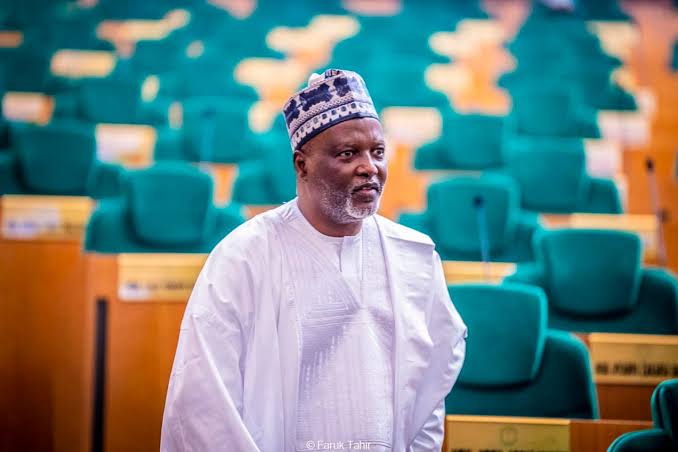
Former Deputy Speaker of the House of Representatives, Idris Wase, on Wednesday revealed that suspected Boko Haram members and other criminal groups were previously found among those shortlisted for recruitment into the Nigerian Army and police.
He made this revelation during a special plenary session focused on the nation’s security challenges.

Wase, an All Progressives Congress representative from Plateau State’s Wase Federal Constituency, warned that allowing criminal elements to penetrate security agencies endangers national safety.
He also noted that his claims could be verified by the former Chairman of the House Committee on Defence, now Chairman of the Committee on the Federal Capital Territory, Muktar Betara.
He stated, “My brother and friend, the former Defence Committee Chairman, Honourable Betara can attest to this. There were recruitment exercises where names of known Boko Haram members appeared on the shortlist. Armed robbers and other criminals were also found among those cleared for the Army and police.”
Wase urged caution in recommending individuals for military and police recruitment, stressing that only persons of high integrity should be endorsed.
The lawmaker, who shared that he lost a brother, cousin and nephew to terrorist attacks, said the North Central geopolitical zone accounts for roughly 52 per cent of the insecurity affecting Nigeria.
He narrated how one of his younger brothers begged to be moved away from their troubled community due to persistent attacks.
Wase further called for a reassessment of the presidential policy withdrawing police personnel from VIP protection roles. Although he acknowledged the reasoning behind the directive, he stressed the need to classify categories properly to avoid exposing critical officials to danger.
Speaking on behalf of the North-West Caucus, Sada Soli described insecurity in the region as “complex and layered”, fuelled by criminal activity, environmental strain, poor governance and deepening economic hardship. He said that a solely force-based approach would be insufficient, advocating instead for security intervention alongside governance reforms, environmental management and economic recovery measures.
“Lasting peace depends on rebuilding trust in government, reforming land and livestock systems, and ensuring that communities help shape solutions,” Soli noted.
For the North-East Caucus, Muktar Betara described the zone as the “ground zero of terrorism, insurgency and recurring communal violence”, recalling tragic incidents from the 2015 Baga massacre to pipeline bombings that claimed both civilian and military lives.
He added that despite the scale of the challenges, coordinated efforts and strategic planning could help curb the spread of violence.
South-South senator, Solomon Bob (PDP, Rivers), criticised past administrations for lacking the determination to tackle insecurity, arguing that the government has often negotiated with terrorists rather than enforcing accountability.
“Since 1999, what we have seen is leadership failure. Governments have chosen to placate terrorists, negotiating with killers instead of enforcing the law,” he said, warning that reducing terrorism to banditry underestimates the severity of the situation.
In her remarks, House Committee on Women Affairs Chairman, Kafilat Ogbara, condemned the severe impact of insecurity on women and children, pointing to mass abductions in Papiri and Kamba as examples.
“These are not just security failures; they represent a breach of the state’s core obligation to safeguard lives and property,” she lamented.