

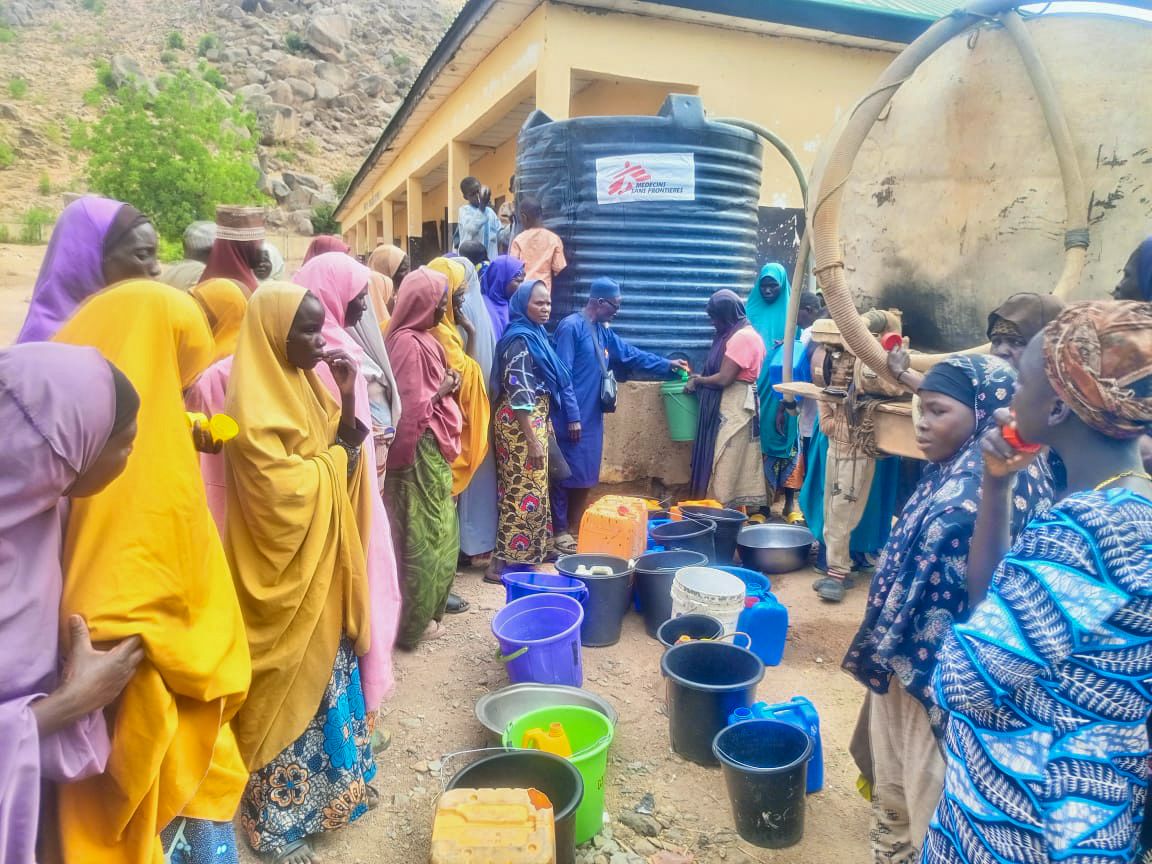
Médecins Sans Frontières (MSF) has begun an emergency humanitarian response in northeast Nigeria following a fresh wave of violence in Borno State that displaced over 5,000 people.
Many of the affected residents are now living in poor conditions in Pulka, Gwoza Local Government Area.

According to the organisation, the displacement was triggered by attacks on March 3 in Ngoshe, a community in Gwoza LGA, which reportedly resulted in deaths and abductions. The violence forced residents to flee suddenly, with many leaving behind their belongings.
MSF explained that the displaced population—mainly women, children, and elderly people—has taken shelter in Pulka, about 15 kilometres away. However, the lack of proper accommodation has left many families sleeping outdoors or on the streets.
“Our homes were bombed, everything we owned was bombed. We fled to Pulka with almost nothing; we had to leave everything behind and run”, said Safiya Mohammed Aga, a displaced resident from Ngoshe.
In response, MSF said it launched a four-week emergency operation beginning April 10 to address urgent needs among the displaced population.
The organisation reported that over 900 families have received essential non-food supplies such as cooking utensils, sleeping mats, mosquito nets, jerrycans, and buckets. In addition, 884 dignity kits containing items like menstrual hygiene materials, soap, and oral care products were distributed to vulnerable individuals.
To improve worsening water and sanitation conditions, MSF has begun repairing sanitation facilities and is supplying about 16,000 litres of clean drinking water daily. Its health promotion teams are also conducting hygiene awareness campaigns to help prevent disease outbreaks.
Despite these efforts, MSF said humanitarian needs in Pulka remain extremely high, especially in food supply, clean water, and sanitation services.
“People urgently need food and improved access to water, sanitation and hygiene services,” said Abdoulaye Mahmoudoune, MSF emergency field coordinator.
“MSF is responding, but we cannot meet these overwhelming needs alone. Families who fled violence are now struggling to survive in extremely precarious conditions. Other humanitarian organisations must urgently step in.”
The organisation noted that northeastern Nigeria continues to suffer from over a decade of conflict involving Boko Haram and related groups, leading to repeated displacement and a long-standing humanitarian crisis.
Communities in Gwoza have experienced several waves of violence, which have overwhelmed health facilities and weakened already limited public services. Humanitarian agencies also warn that declining funding is worsening the situation and restricting relief efforts.
MSF added that funding shortages and reduced humanitarian support in Borno State are putting essential healthcare and life-saving services at serious risk.
The group has been supporting Gwoza General Hospital since August 2025 by providing emergency medical care and referrals. It also works with health authorities to offer maternal and newborn care in Kushari and runs nutrition programmes in Maiduguri for children under five suffering from acute malnutrition.
Finally, MSF urged humanitarian organisations to urgently expand support in Pulka, especially in food aid and water, sanitation, and hygiene services, and called on donors to increase sustained funding for healthcare in northeast Nigeria.
