

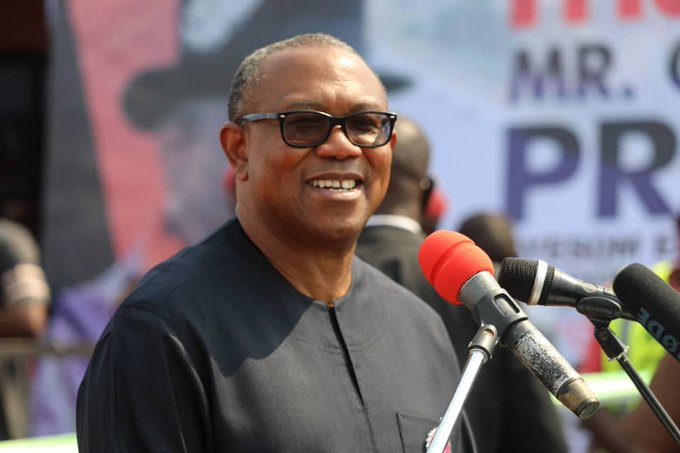
Former Anambra State governor and 2027 presidential hopeful, Peter Obi, has said the alleged neglect of Nigeria’s education sector is a major factor behind the country’s low human development, urging urgent reforms and stronger collaboration between government, private sector, and academia to reposition the system for growth and global relevance.
Obi made the remarks while delivering a lecture titled “Repositioning Nigeria’s Education Sector Through Private Partnership for National Growth and Global Competitiveness” at Coal City University.

He emphasised that a nation’s progress is tied to the quality of its education system, noting that Nigeria’s future depends more on its classrooms, laboratories, and research institutions than on natural resources or political rhetoric.
He lamented ongoing challenges in the sector, including chronic underfunding, poor infrastructure, outdated curricula, and weak links between education and industry.
Referencing global benchmarks by UNESCO, Obi said Nigeria spends less than 7% of its national budget on education—far below the recommended 15–20%—a gap he linked to youth unemployment and underemployment rates exceeding 30%, as well as a mismatch between graduates’ skills and labour market demands.
He also called for broader government support across all levels of education, questioning the limited reach of the Tertiary Education Trust Fund (TETFund).
“Do students in private universities come from another planet?” he asked, arguing that extending support to private institutions would strengthen the overall education ecosystem.
Citing data from the United Nations Development Programme (UNDP), which ranks Nigeria 161 out of 193 countries on the Human Development Index (HDI) with a score of 0.548, Obi said the ranking highlights deep structural weaknesses in education, healthcare, and living standards.
He added that Nigeria’s life expectancy—estimated between 50 and 55 years—remains well below global averages due to weak healthcare systems and limited access to quality services.
Drawing comparisons, he noted that countries like Indonesia and Egypt, with HDI levels around 0.73–0.74, have made greater progress through sustained investment in human capital, while South Africa continues to outperform many peers due to stronger institutions and higher spending on education and health.
Obi also pointed to disparities in funding, noting that South Africa allocates about $30 billion to education for a population of roughly 65 million, while Nigeria spends about $2.5 billion annually for over 200 million people—describing the gap as “funding starvation.”
He said Nigeria’s literacy rate, estimated between 59% and 69%, is insufficient for a knowledge-based economy, stressing the close link between education, health, and productivity.
“Nigeria’s problem is not a lack of talent, but a failure of alignment, investment, and partnership. Repositioning the education sector is fundamental to achieving sustainable development and global competitiveness.
“Weak education systems often translate into poor health awareness, lower life expectancy, and reduced economic output,” he added.
Obi argued that government alone cannot adequately fund or modernise education, identifying weak collaboration between academia and industry as a major barrier. He advocated for public-private partnerships to drive infrastructure development, boost research, reform curricula, and create employment pathways through internships and apprenticeships.
He called for increased investment in education and healthcare, curriculum reforms aligned with industry needs, expanded funding for research and innovation, and greater focus on skills development and entrepreneurship. He also urged the private sector to see education investment as essential for national stability and economic growth.
The university’s Vice-Chancellor, Adam Icha Ituma, and the event chairman, Chinedu Nebo, described Obi’s lecture as timely and insightful, encouraging stakeholders to act on his recommendations.
