

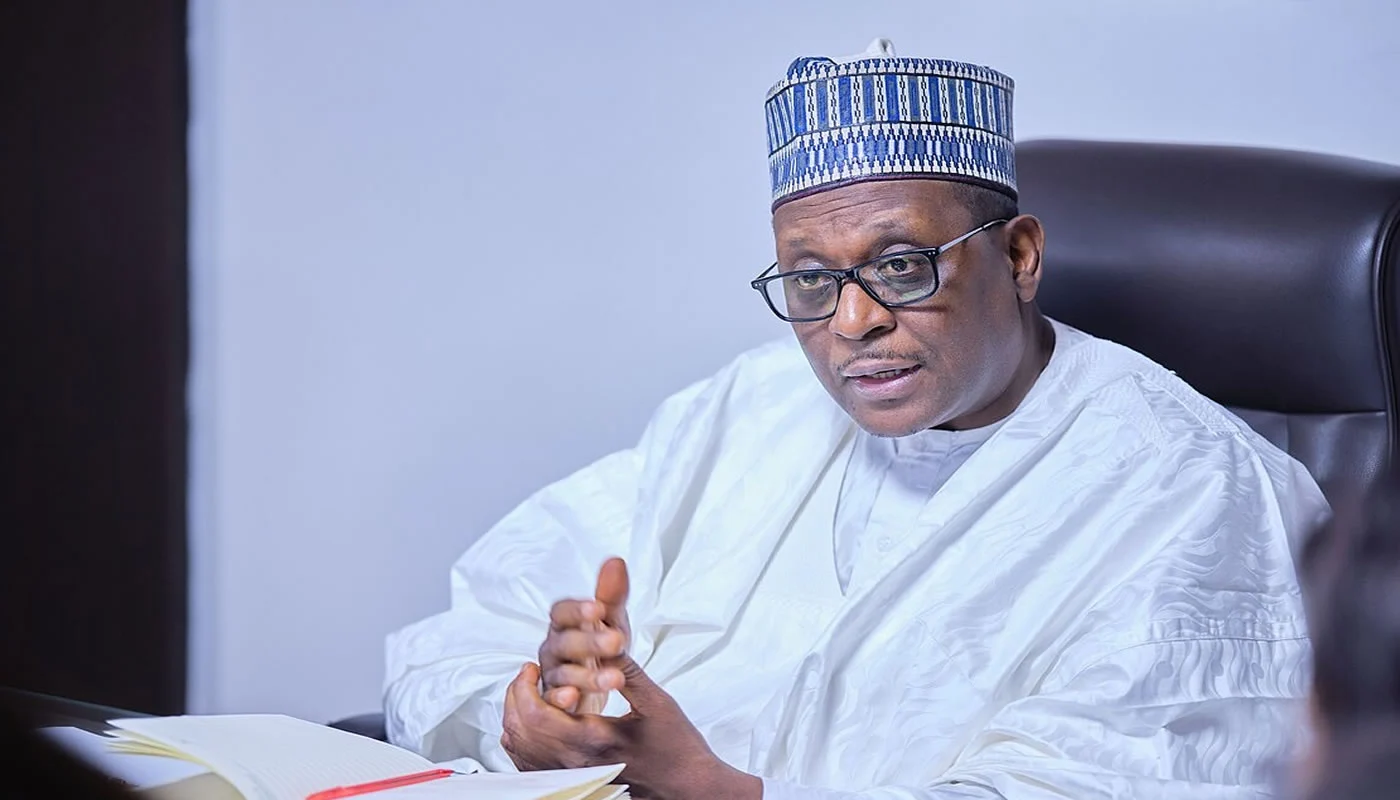
The Coordinating Minister of Health and Social Welfare, Dr. Ali Pate, has stated that Nigeria is capable of responding adequately to medical emergencies, while also stressing that the healthcare sector still requires greater financial investment.

Speaking on Sunday Politics on Sunday, Pate explained that although notable efforts have been made to enhance emergency services and medical infrastructure across the country, continuous and sustainable funding is essential to achieve better health outcomes.
“I will tell you that every investment is required it’s been made to ensure that we have the facilities that will deal with emergencies. People can choose to stay at home for different reasons, historical reasons, medical reasons. If you’ve had surgery, for instance, 10 years ago by a provider you did in Ghana, it’s logical that you want to go back to that provider, not because you don’t respect them, but if you have a new issue, it can be a problem, it can happen, I’d be tackled.
“We have a national eye hospital, an ear hospital. So there are those specialisations that are available. The issue is that many of us don’t really know the depth of what exists in Nigeria. And so we run around without knowing that there are certain things that we can get here.
“Although in many of the hospitals that I’ve encountered, some of them have trained abroad and came back to serve within hospitals here in Nigeria.”
He noted that under President Bola Tinubu’s administration, healthcare spending has risen from roughly four per cent in 2023 to above five per cent, reflecting a significant increase in public investment in the sector over the last two years.
Pate revealed that ongoing reforms in the health sector are focused on four key priority areas: expanding health insurance coverage, improving the welfare and working conditions of health professionals, making quality healthcare more accessible to people under micro insurance schemes, and strengthening international partnerships and collaborations.
He further said the country has recorded notable progress in reducing maternal mortality and combating malaria.
According to him, 20 of Nigeria’s 36 states performed better in 2025 compared to 2024.
He explained that before the current administration came into office, 8,000 basic healthcare facilities benefitted from direct facility financing under the Basic Healthcare Provision Fund, and that number has since been expanded by an additional 5,000 facilities.
As of the first quarter of 2025, Pate disclosed that more than 80 million patient visits were recorded at these basic healthcare facilities nationwide, compared to about 20 million visits in 2023.
He also stated that 59 million children were immunised during the most recent campaign. Between 2023 and 2025, maternal mortality in 172 local government areas with the highest burden dropped by 10 per cent, while health insurance enrollment increased to over 21 million people from about 16 million.
Addressing National Health Insurance Scheme (NHIS) coverage, Pate said 7 million Nigerians in the informal sector and 2.4 million in the formal sector are insured, noting that additional citizens are also covered through informal arrangements.
He added that the government aims to insure 50 million Nigerians gradually, a target that depends largely on increased and sustained funding.
He further disclosed that of the six specialised centres being constructed by the current administration, three cancer centres have been completed, while construction is ongoing on the remaining three.
Pate also revealed that more than 73,000 health workers have been retrained so far, adding that insurance coverage will continue to expand as government revenue grows, in order to address decades of underinvestment in the health sector.
Despite improvements in malaria control, he expressed concern that none of the billions of mosquito nets distributed across Africa are manufactured on the continent.
However, he welcomed the commencement of a mosquito net manufacturing factory in Ogun State, and also highlighted progress in reducing cases of meningitis, N-Pox, cholera, and other diseases.
He identified several challenges hindering malaria reduction, including rapid population growth, climate change, rainfall patterns, drug resistance, limited access to appropriate medications, and funding constraints.
Pate specifically raised concerns about declining compliance among families with the four-dose malaria immunisation programme after the first dose.
He praised Lagos State for reducing malaria prevalence from 90 per cent to five per cent, attributing the success to the proactive measures taken by the state government.
He expressed confidence that the introduction of two-dose malaria drugs would help alleviate the burden of the disease, despite existing resistance challenges.
Commending the combined N2.6 trillion investment made by all 36 state governments in the 2024 fiscal year, Pate urged governors to increase their healthcare budget allocations beyond the federal government’s benchmark in subsequent years.
Responding to recurring industrial actions by medical doctors, the minister expressed regret over the situation, explaining that many of the grievances are longstanding issues, including over N50 billion in unpaid arrears dating back to 2023, while others are being addressed through dialogue.
He said, “I have to say that in the last two and a half years, we experienced relative harmony. We have not had major disruptions in services except for the period where resident doctors, not the medical association, not the medical and dental consultants, only the trainee physicians, the younger physicians, who took on issues that were legacy issues for a very long time, long litany of issue that they brought to the fore, some of which are still happening today.
“Some of which were given, some of which were addressed, some of which ultimately had to be renegotiated. So it’s unfortunate, and we hope that they’ve learned an important lesson, that in fact, you don’t take a country hostage.”
He acknowledged that outstanding arrears from 2023 amounted to N50 billion, adding that the Minister of Finance has been “able to deal with them.
“There are other issues of agitation around allowances and increments, which the Secretary of the Government convened a collective bargaining agreement mechanism, which is known in labor relations, which is on the way,” he said.
