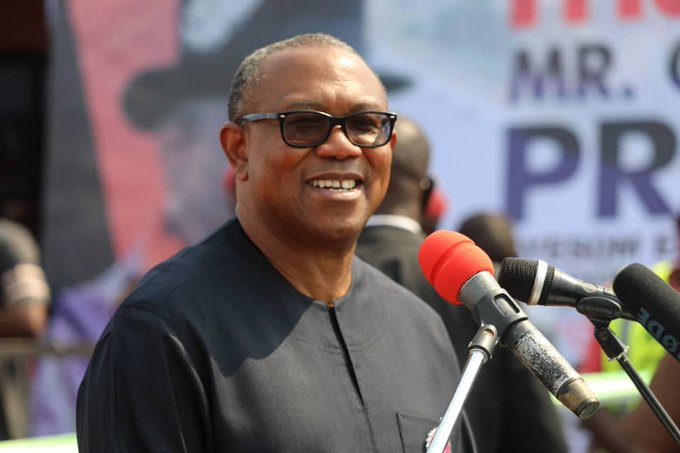
A former Governor of Anambra State, Peter Obi, has raised concerns over Nigeria’s projected $11.6 billion debt servicing bill for 2026, warning that it reflects troubling fiscal priorities.
In a statement published on his official X account on Monday, Obi said borrowing is not inherently wrong when it is managed prudently and channelled into productive investments.
However, he argued that Nigeria’s current borrowing pattern has largely funded consumption rather than long-term development.
“A huge proportion of past borrowing has been directed toward consumption, with limited visible or sustainable developmental outcomes to justify the scale of indebtedness,” he said.
Obi also noted that a significant portion of the debt currently being serviced was accumulated under the administration of Bola Tinubu, while new borrowing has continued at a rapid pace.
According to him, recent external loan commitments include about $5 billion from First Abu Dhabi Bank in the UAE, $1 billion through UK Export Finance via Citibank London, a proposed $1.25 billion World Bank facility, and an additional $516 million arranged through Deutsche Bank.
He added that domestic borrowing through bond issuances was also increasing the country’s overall debt profile.
Obi compared the projected debt servicing costs with allocations in the proposed 2026 budget, noting that health, education and poverty alleviation combined account for about ₦5.885 trillion, while debt servicing could reach between ₦17 trillion and ₦18 trillion depending on exchange rates.
“This imbalance highlights a troubling fiscal reality in which debt obligations increasingly crowd out investment in human capital and poverty reduction,” he stated.
The former governor pointed to countries such as Japan, United Kingdom, United States, United Arab Emirates, Singapore and Indonesia as examples of nations that borrow heavily but invest in sectors that generate sustainable economic returns.
He argued that the key issue is not borrowing itself, but whether loans are converted into measurable productivity, inclusive growth and improved living standards.
Obi’s comments followed remarks by President Tinubu at the recent Africa Forward Summit in Nairobi, where the president disclosed that Nigeria could spend approximately $11.6 billion on debt servicing in 2026.
The former Labour Party presidential candidate recently joined the Nigeria Democratic Congress alongside former Kano State governor Rabiu Musa Kwankwaso after leaving their previous political platforms.
Toyibat, armed with an MSc degree in Mass Communication from University of Lagos, is a result-driven media and education professional blending journalism, teaching, and research to engage, inform, and inspire through creative storytelling