

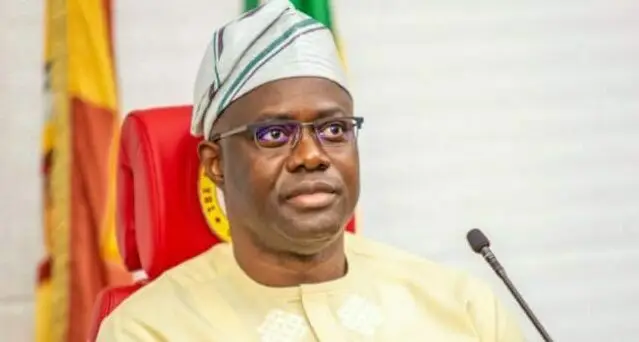
Oyo State Governor, Seyi Makinde, has called for a review of Nigeria’s petroleum pricing framework, arguing that the national conversation should move beyond the debate over fuel subsidy removal or restoration.
Makinde said Nigeria, as an oil-producing country, must examine whether the current system for determining petrol prices reflects its economic realities and enables citizens to fairly benefit from the country’s natural resources.

The governor made the remarks in a newsletter titled The Business of Governance, published on his official website as part of his proposed “Reset Nigeria” movement.
According to Makinde, the long-running debate surrounding fuel subsidies has overshadowed more fundamental questions about the process and factors used in fixing petroleum product prices.
“Different countries arrive at petroleum prices differently. What Nigerians deserve to know is the current pricing framework and the assumptions that determine what we pay at the pump,” he said.
He called for transparency in the breakdown of petrol prices, including crude oil benchmarks, refining expenses, profit margins, exchange-rate considerations, logistics, distribution costs, taxes and levies.
Makinde argued that making the information public would help Nigerians understand how pump prices are determined and allow for a comparison between the current framework and alternative models.
The governor also faulted the claim that Nigerians must pay higher prices for petrol to prevent smuggling into neighbouring countries.
“We should also reject the argument that Nigerians must pay more for petroleum products simply to eliminate the price difference that makes smuggling into neighbouring countries profitable,” Makinde said.
“Nigerians should not be made to bear the cost of government’s inability to secure its borders.”
He maintained that the country’s petroleum policy debate should not be restricted to whether fuel subsidies should be retained or removed, but should instead focus on the broader structure of the pricing system.
“Reset Nigeria means being willing to interrogate the system itself,” Makinde said.
The governor said he would present his proposed alternative approach to petroleum pricing in the coming weeks, adding that Nigerians would have the opportunity to examine and assess the proposal.
Makinde further argued that the need to reform existing systems extends beyond the petroleum sector, noting that several of Nigeria’s longstanding problems stem from institutional and structural deficiencies.
He listed poverty, youth unemployment, insecurity and weak institutions among challenges successive administrations have been unable to permanently address.
According to him, achieving meaningful national reform would require responsible leadership and the active involvement of citizens.
“This will not be an instant transformation, nor will it be the work of one person,” he said, calling for “a deliberate national effort supported by a clear roadmap, measurable priorities and the sustained participation of Nigerians at home and abroad.”
