

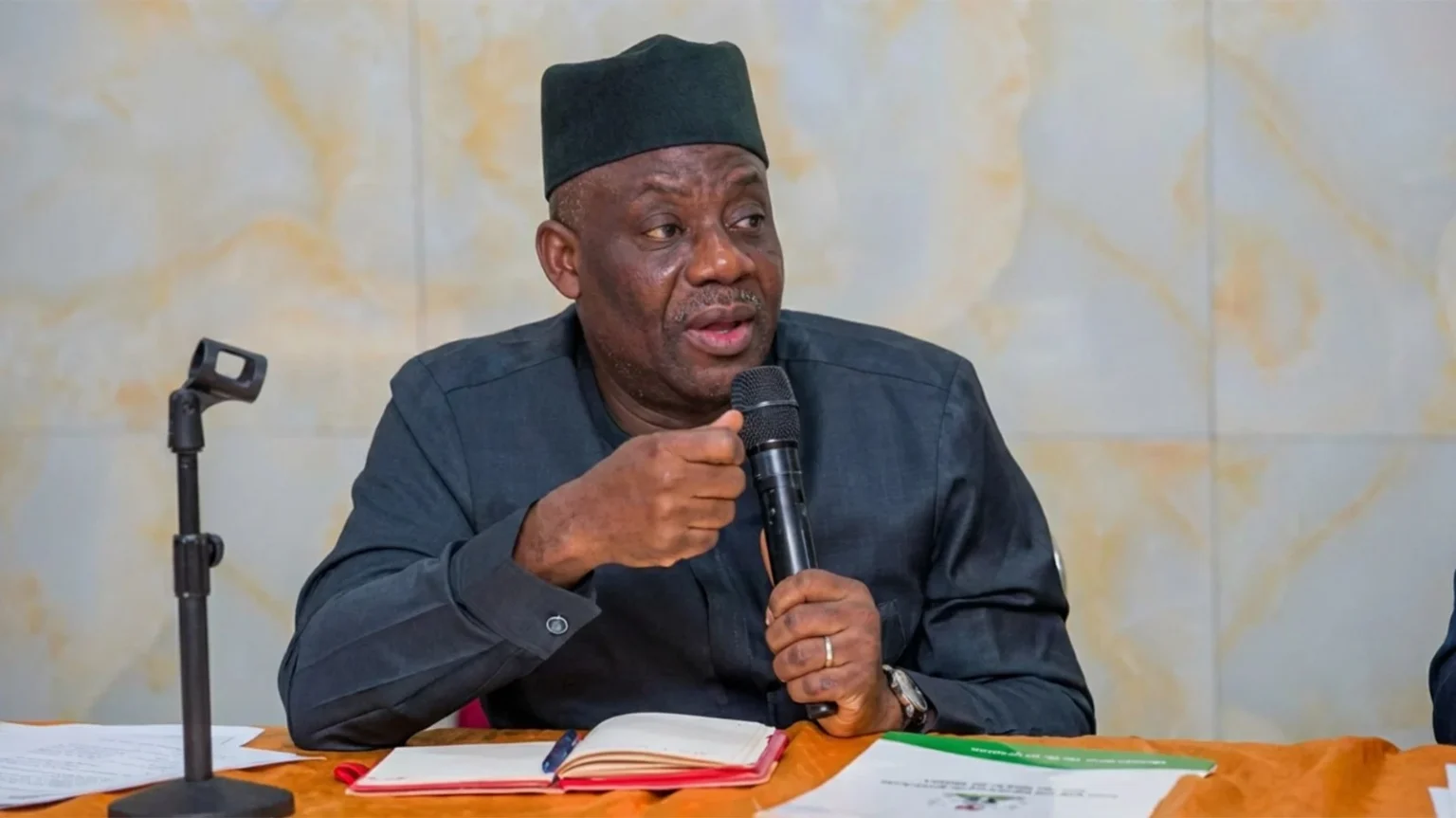
The Federal Government has assured Nigerians that financial hardship will no longer prevent qualified students from accessing higher education, stating that the administration of President Bola Tinubu has expanded opportunities through student-centered reforms and more than ₦1 trillion invested in universities, polytechnics and colleges of education.
The Minister of Education, Dr. Tunji Alausa, made the statement during a meeting with members of the National Committee for the Advancement of Occupational Therapy, Audiology and Speech and Language Therapy Education.

In a statement issued on Tuesday by the Minister’s Special Adviser on Media and Communications, Ikharo Attah, Alausa said the government remained committed to making quality tertiary education accessible to every qualified Nigerian, irrespective of financial status.
According to the minister, President Tinubu has placed human capital development at the centre of his administration by introducing policies designed to remove the financial challenges that have kept many young Nigerians out of tertiary institutions.
“This President, President Bola Ahmed Tinubu, has opened up access to students so that not having money, or coming from an indigent family, or your parents being poor, will no longer stop you from achieving the opportunities you can achieve in life. Education is no longer a barrier for students in this country,” he said.
Alausa added that the reforms are intended to equip young Nigerians with the opportunities needed to contribute to national development.
“We thank President Bola Ahmed Tinubu for believing in the youth of this country and giving them all the opportunities for them to excel, to be useful to themselves, to be useful to their communities, to be useful to the country and to the global world at large,” Alausa said.
He noted that the government had matched its commitment with investments exceeding ₦1 trillion in tertiary education over the last two years.
The minister said ₦250 billion had been allocated for the construction of new student hostels across tertiary institutions, while more than ₦150 billion was spent on upgrading existing hostels, classrooms, engineering workshops and other academic facilities.
He also revealed that over ₦130 billion had gone into the rehabilitation and expansion of medical schools across the country.
According to Alausa, another ₦52 billion was approved for the procurement of modern equipment for 18 medical schools, while close to ₦30 billion funded the establishment of 11 advanced medical simulation laboratories to improve hands-on clinical training.
The minister further disclosed that nearly ₦110 billion had been invested in building and upgrading engineering workshops and supplying modern equipment to federal universities of technology, conventional universities offering engineering programmes and polytechnics.
He described the interventions as some of the biggest investments ever made in Nigeria’s tertiary education sector, covering infrastructure development, rehabilitation projects, modern equipment, specialised laboratories, workshops and institutional capacity building.
“This is amazing. This is just mind-boggling what this President has done in rapidly transforming tertiary education,” the minister said.
He expressed confidence that the investments would help institutions produce graduates with the technical knowledge and practical skills needed to drive innovation, industrial growth and economic development.
Alausa reaffirmed the ministry’s commitment to working with tertiary institutions and relevant stakeholders to ensure the reforms deliver stronger institutions, better educational outcomes and wider opportunities for students.
During the meeting, the Chairman of the National Committee for the Advancement of Occupational Therapy, Audiology and Speech and Language Therapy Education, Dr. Victoria Omua Amu, updated the minister on the committee’s activities.
She said the committee had drawn up a one-year implementation plan, created a governance structure and established specialised subcommittees to strengthen advocacy, academic partnerships and manpower development.
Amu disclosed that six universities currently offer Audiology programmes, five run Occupational Therapy programmes and three offer Speech and Language Therapy programmes. She added that the University of Benin is expected to begin its Occupational Therapy programme in the 2026/2027 academic session.
She, however, identified delays in the release of TETFund support as a major obstacle to implementing the committee’s plans.
The Federal Government has made expanding access to tertiary education a major part of President Tinubu’s Renewed Hope Agenda.
Over the past year, the government has introduced the Nigerian Education Loan Fund to provide interest-free loans for eligible students while increasing funding for tertiary institutions through the Tertiary Education Trust Fund.
It has also prioritised the rehabilitation of medical schools, engineering workshops, student hostels and other learning facilities to improve teaching, research and innovation across universities, polytechnics and colleges of education.
