

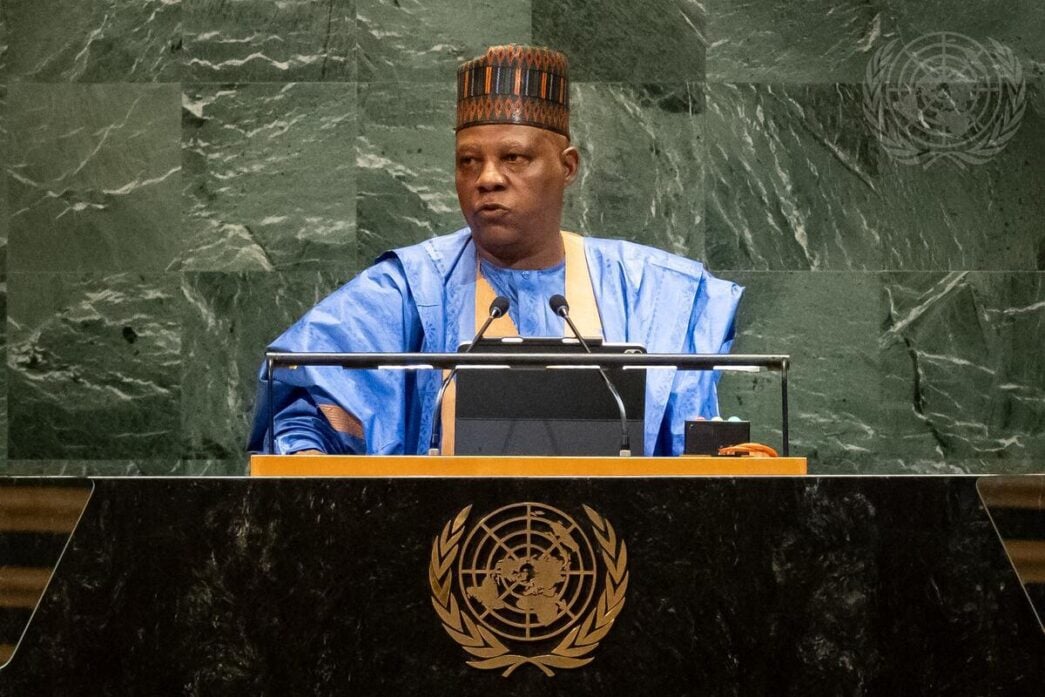
Vice President Kashim Shettima has said Nigeria is on the right path, noting that the economic reforms introduced by the administration of Bola Tinubu are beginning to yield positive results.
Shettima made the remarks at the Nasarawa Economic Summit 2026, where he spoke as special guest of honour, stating that investor confidence in Nigeria’s economy is improving.

He highlighted key reforms by the administration, particularly the removal of fuel subsidy, describing it as a necessary and bold decision taken at a critical time.
“Some of the economic decisions that the presidency took were almost inevitable because even our national reserves were paltry and not even enough to import fuel for one month.
“But he never ran to town with the story of bankruptcy, as he knew the effect of such on the economy.
“He took the bold decision. The removal of the fuel subsidy was not part of his official speech. He kept it close to his heart. Either he took it there, or he might never take it again.”
According to him, Nigeria’s gross external reserves have improved, rising above $46 billion in 2025, while confidence is gradually returning to the market. He added that investors who entered the capital market a year earlier have seen significant returns, reflecting renewed economic optimism.
“Confidence is returning to the marketplace. Those who invested in the capital market a year ago are worth three times their investments.
“I know the stock market…what was the price of Zenith, GT banks last year…N40-N50. Now the stock prices are N130. That goes to show that the economy is working and booming. Investors are beginning to see Nigeria as a country willing to correct itself.”
He stressed that capital flows to economies that demonstrate credibility, stability, and direction.
Shettima’s remarks come as President Tinubu, speaking to investors in Paris, reiterated that the removal of fuel subsidy has helped stabilise Nigeria’s foreign exchange market.
Meanwhile, the Minister of Finance and Coordinating Minister of the Economy, Taiwo Oyedele, maintained that the government would not reverse the subsidy removal, arguing that subsidies created economic distortions and that fuel pricing should be left to market forces.