

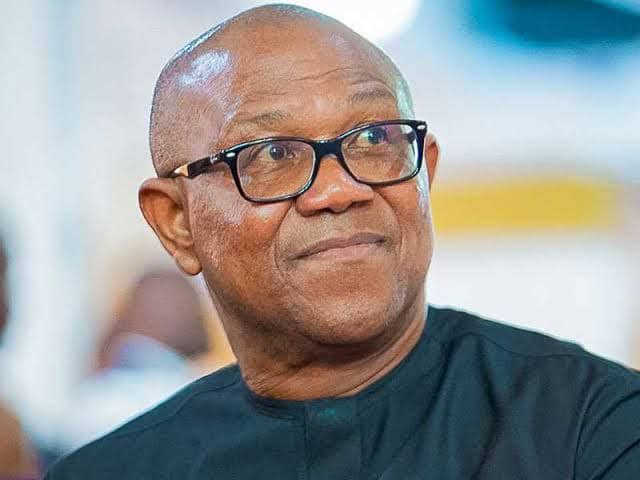
Former Labour Party presidential candidate Peter Obi has called on President Bola Tinubu to bow out ahead of the 2027 election, declaring that the President is “tired” and no longer has what it takes to confront Nigeria’s deepening economic and security crises.
Speaking during an exclusive interview on Sunday Politics with Seun Okinbaloye on Channels Television, Obi acknowledged Tinubu’s record as Lagos State governor but insisted that his current presidency had fallen well short of what the country demands.

“The Bola Tinubu that was governor is not the one that is president today. He’s tired. He should be allowed to retire in peace, and then go home,” Obi said.
The former Anambra State governor said Nigeria was drifting in the wrong direction and urgently needed a leader with the vigour and resolve to turn things around.
“As it is right now, Bola Tinubu is leading us nowhere. We will turn it so he can see it. That’s why maybe I’m calling for his retirement. The man should just step aside. Yes, he doesn’t have the capacity to do the job.”
Obi painted a bleak picture of the country’s economic and social state, lamenting rising poverty, hunger, insecurity and weak governance. He said reports from international organisations laid bare the depth of Nigeria’s troubles, yet political actors remained fixated on personalities rather than the issues affecting ordinary people.
“World Bank has just said that 79% of Nigerians are going to face poverty. In a country of 230 million people, that’s over 180 million. That should be the issue we should be discussing.”
He added, “They should be talking about the issue of out-of-school children, talking about the issue of health, and all these monies that are missing here and there that would have been invested properly. Nobody is discussing it.”
Obi also raised the alarm over food insecurity, warning that millions of Nigerians faced starvation.
“This election in 2027 should be about issues that affect the ordinary Nigerians… The World Food Programme has just said 35 million Nigerians are going to face hunger. Nigerians are being kidnapped. Let’s talk about Nigeria.”
When asked about former US President Donald Trump’s praise of Tinubu’s efforts against insecurity, Obi acknowledged the commendation but maintained that the government’s response remained woefully inadequate.
“Thank you to Donald Trump. Thank you to President Trump. But we need to do more, far more than what we are doing,” he said.
“I’ve heard people, and Donald Trump is now confirming it, say he has done his best. But with the crisis we are facing, his best is not enough. We need to do more.”
He pointed to a string of abductions in Zamfara State as proof that insecurity remained a national emergency requiring urgent attention.
“On Wednesday, 40 people were abducted in Zamfara, and the entire community, everybody is packing to run away. On Thursday, 50 were abducted. So we’re in a crisis situation that requires another capacity.”
On the link between poverty and insecurity, Obi argued that lasting peace could not be achieved without first tackling economic hardship and expanding access to education.
“You can’t create mass poverty and think you can deal with insecurity,” he said. “The more you put people out of poverty, the more you reduce criminality. You need to invest in education, massive.”
Obi said he would take a far more hands-on approach to security if elected president, pledging personal oversight of crisis responses across the country.
“Whatever it takes to secure any Nigerian, I will do that.”
“If your people are dying, you should be ready to die. You’re the president. You’re the number one person.”
On his presidential ambition, Obi was keen to stress that it was the country’s success, not personal gain, that drove him.
“I’m not desperate to be Nigerian president. I’m desperate to see Nigeria work.”
He added that he would back whoever could deliver good governance.
“If it’s working, I’ll support whatever makes it work.”
Reflecting on Nigeria’s trajectory, Obi expressed deep concern over what he described as the country’s continued slide.
“Every year we’re headed south, where more and more people have been impoverished, more and more children are out of school. Things are going in the wrong direction.”
He reiterated his vision of building “a Nigeria that is united and peaceful” — one where every citizen enjoys equal opportunity regardless of tribe or religion.