

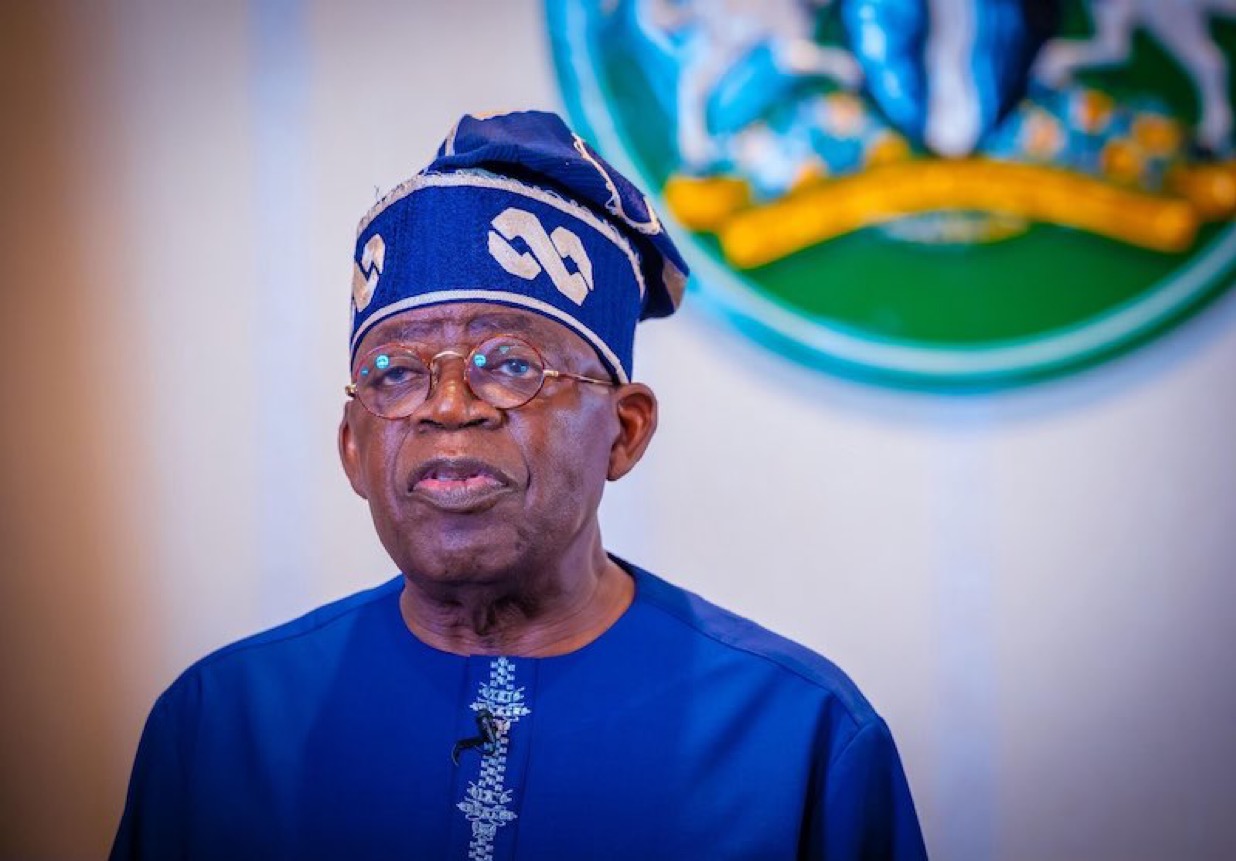
President Bola Tinubu has advocated for the reactivation of a regional standby force to enhance collective security in West Africa and the Sahel, encouraging nations in the region to utilize Nigeria’s National Counter Terrorism Centre in Abuja as an intelligence and operational hub.

His stance was presented in Nigeria’s official statement by the Minister of State for Foreign Affairs, Ambassador Bianca Odumegwu-Ojukwu, during the Conference on Security Situation, Operational Challenges and Future Risk Trajectories in West Africa and the Sahel, held in Accra, Ghana, from January 29 to 30, 2026.
A statement released on Saturday in Abuja by Magnus Eze, Special Assistant on Communications and New Media to the minister, noted that the President reaffirmed Nigeria’s commitment to maintaining peace, security, and stability in the region, emphasizing the importance of stronger multilateral cooperation to tackle the deteriorating security situation in the Sahel.
“Nigeria is favourably disposed to more collaborative and multilateral approaches aimed at dealing with the security crisis in the Sahel,” Tinubu said.
He highlighted Nigeria’s ongoing efforts to monitor and disrupt terrorist activities through partnerships with regional and continental institutions, including the Regional Intelligence Fusion Unit, Liaison Fusion Unit, Eastern African Fusion Unit, and the Committee of Intelligence and Security Services of Africa.
Recalling a 2025 Memorandum of Understanding signed by the NCTC with the African Union on cooperative counterterrorism initiatives, Tinubu stated that “The centre is therefore well positioned to support regional mechanisms and serve as an intelligence coordinating hub in our unified counter-terrorism efforts.”
The President also cautioned about the increasing use of cyberspace by terrorist groups for misinformation and disinformation campaigns, which he said threaten security and stability in the region.
Highlighting Nigeria’s progress in cyber monitoring, surveillance, and intelligence gathering through the National Cyber Security Centre in Abuja, Tinubu urged other West African states to leverage Nigeria’s capabilities to create regional mechanisms to counter cyber-enabled threats.
“Security cooperation remains central to Nigeria’s national interest and regional stability. Through joint initiatives, intelligence sharing and coordinated operations, Nigeria seeks to enhance our collective ability to combat terrorism, transnational organised crime and other forms of insecurity that undermine our individual and collective development,” he said.
Tinubu warned that much of West Africa continues to experience volatile security conditions, with increasing casualties, particularly among women and children. He identified the absence of a unified counterterrorism focal point and thinly spread defense forces as factors creating power vacuums exploited by militant groups.
“These power vacuums have afforded Sahel-based terrorists the freedom to expand their activities from the central Sahel to littoral West Africa, with Nigeria, Benin, Togo and Ghana among those bearing the brunt,” he said.
He also expressed concern that drug cartels may shift operations to weaker West African jurisdictions amid intensified anti-narcotics efforts in South America, increasing the risk of alliances between traffickers and insurgent groups.
“This development is worrying, as it could bring financially solvent drug cartels into closer proximity with insurgents operating in the region,” Tinubu said, noting that such groups might exchange cash for logistics and secure smuggling routes.
The President further highlighted political divisions in the region—including what he described as an emerging ECOWAS–AES divide, overreliance on foreign support, and reluctance by states to subordinate defense decisions to supranational authorities—as key obstacles to effective counterterrorism cooperation.
“To address longstanding and emerging misapprehensions among member states, there is a need to separate political proclivities from security collaborative initiatives, to pave the way for sustainable security partnerships,” he said.
Beyond military action, Tinubu urged nations to address underlying causes of instability, such as poverty, governance challenges, marginalization, and the over-militarization of counterterrorism strategies.
He called on ECOWAS and AES states to ease tensions and restore an inclusive framework that reflects shared security and economic interests.
Tinubu expressed confidence that the discussions of intelligence chiefs and strategic stakeholders at the Accra conference would help establish a sustainable, inclusive regional counterterrorism strategy.
