

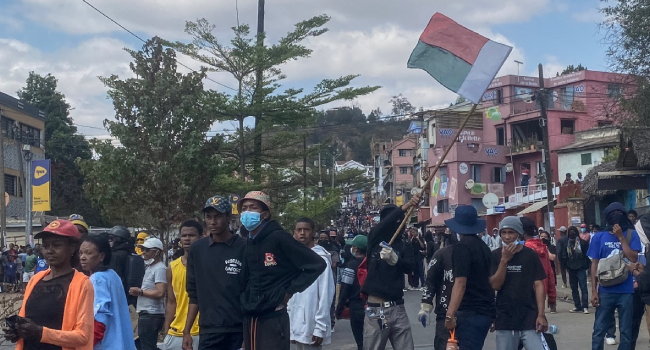
The United Nations on Friday urged the authorities in Madagascar to stop using excessive force against protesters, following violent clashes with police at a youth-led rally in the capital. The unrest has continued for two weeks, leaving several dead.
Antananarivo remained calm on Friday, although parts of the city were still sealed off by security forces, according to AFP journalists. The previous day, police had fired tear gas and rubber bullets at thousands of demonstrators from the “Gen Z” movement, who were protesting against severe power and water shortages on the impoverished Indian Ocean island.

At least six people were injured, and AFP reporters saw one man lying unconscious after being chased and brutally beaten by security officers. Armoured vehicles were also deployed to disperse the crowd.
“We are receiving troubling reports of ongoing violence against protesters by the gendarmerie,” the UN Human Rights Office said on social media on Friday.
UN High Commissioner for Human Rights, Volker Türk, renewed his call for security forces to refrain from unnecessary force and to respect the rights to peaceful assembly and free association.
Madagascar’s security forces defended their actions, claiming they had taken “strict measures” because protesters sought to “terrorise the population” and “incite looting.”
The conflict-monitoring group ACLED reported that September recorded the second-highest number of protests in Madagascar since it began collecting data in 1997, surpassed only by demonstrations before the 2023 elections.
The UN stated on 29 September that at least 22 people had been killed during the initial days of the unrest. President Andry Rajoelina, however, disputed the figures, insisting that only 12 deaths were confirmed and that all those killed were “looters and vandals.”
According to their lawyers, 28 protesters have been referred to the prosecutor’s office for formal charges, with five currently held in pre-trial detention at Tsiafahy Prison — described by Amnesty International as overcrowded and “hellish.”
Rajoelina initially took a conciliatory approach, dismissing his entire government in response to the protests. However, he has since hardened his stance, appointing a military officer as prime minister on 6 October and selecting key cabinet members from the armed forces, public security, and police. He declared that the country “no longer needs disturbances.”