
[Special Report] Osogbo Agenda: The Political Uprising That Could Redraw Osun’s Map — and Shake Nigeria’s 2027 Power Equation

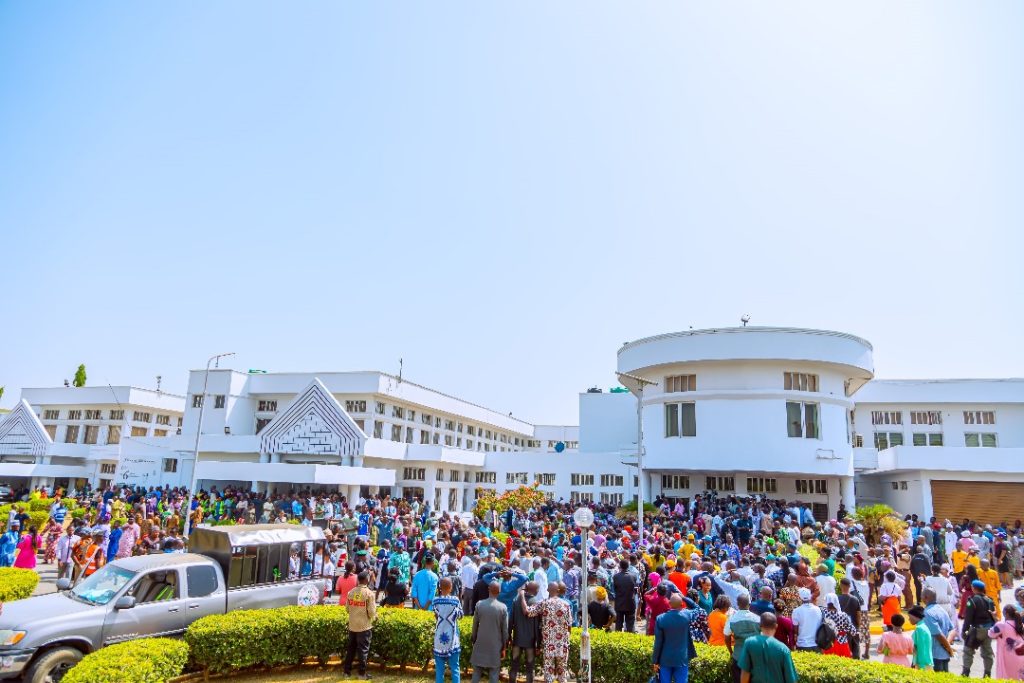
A political storm is gathering in Osogbo — and its tremors are shaking the Southwest. After decades of loyalty without reward, Osogbo’s people have found their voice in a fiery new movement: Osogbo L’Okan. What began as a murmur of frustration has grown into a citywide revolt, now redrawing the map of Osun’s 2026 governorship race. OLAOTAN FALADE, NewsCick Nigeria‘s Editor, uncovered the forces and tendencies at play in the race ahead 2026 Osun gubernatorial election in this special report.
After three decades of loyalty without reward, Osogbo’s people are rising in one voice under the banner of “Osogbo L’Okan” — a Yoruba phrase popularized by then presidential candidate of the All Progressives Congress (APC), Bola Tinubu at a meeting with party loyalists in Abeokuta, the Ogun state capital on June 3, 2022 where he highlighted his sagacity and preparedness to lead the country, given his political history and contributions. The phrase literarily meaning ‘it is my turn’ turned out to become the fulcrum upon which Tinubu subsequently won the 2023 presidential polls.

In similar vein, residents of Osogbo are insisting that the 2026 governorship ticket must finally rotate to the city that has long carried the state’s political burden. And this time, it appears this is not just rhetoric. From mosques, markets to university halls and civil service corridors, a once-complacent electorate is now awake, angry, and organized.
The ancient town that houses Osun State’s seat of power is no longer whispering; it’s roaring. From the palace of Ataoja, and respective domains of the Baales, to the narrow corridors of Ayegbaju, Ayetoro, Oja Oba, Igbona, Orisunmbare markets, a wave of political consciousness is sweeping through Osogbo — a capital city that waited more than three decades to demand for one of its own to govern the state.
What began a couple of years ago but recently resurrected in full force as murmurs of discontent over political neglect has now transformed into a full-blown movement. Its slogan — “Osogbo L’Okan” (It’s Osogbo’s Turn) — has become a rallying cry for fairness, representation, and long-denied recognition. And behind it, NewsCick Nigeria can authoritatively reveal, is a growing coalition of elders, youth groups, professionals, and even political outsiders — united by one goal: that Osogbo must take the top seat in 2026.
A Capital’s Long Wait and a Bursting Patience
According to political stakeholders, for 34 years since Osun’s creation, Osogbo has remained the state’s political and administrative capital — the home of the Government House, ministries, and the very ballot boxes that determine the fate of others. Yet, despite its electoral loyalty and population advantage, the governorship seat has always eluded it.
“The city votes, others rule,” said Alhaji Kareem Adebisi, a retired teacher and respected community elder in Oke-Baale. “We deliver thousands of votes every cycle, but after elections, we’re left with potholes and promises. This time, we will not be spectators.”
That sentiment is now the undercurrent shaping Osun’s political temperature. Religious leaders preach fairness in their Sunday/Friday sermons, youth organizations hold political circles, and professional associations quietly strategize to ensure Osogbo’s collective voting power is not wasted again.
As August 2026 draws closer, the battle for Osun may not just decide who governs the state — but who controls the political future of the South West.
Enter the Outsiders: ADC’s Calculated Gamble
Findings by NewsCick Nigeria revealed that going by the APC and the ruling PDP’s wrestle with internal divisions, a relatively young party but ambitious political force, African Democratic Congress (ADC) is strategically positioning itself to ride on Osogbo’s political sentiment as the “credible alternative” to Osun’s two dominant forces.
According to digs by this medium and insider interviews, the ADC has identified Osun 2026 as its launchpad for national relevance — with plans to field a consensus candidate from Osogbo to ride the city’s swelling discontent.
“The thinking in ADC is simple. If Osogbo delivers one of its own, the political earthquake will not only shake Osun; it will rattle the entire Southwest — and by extension, Abuja,” a source privy to high-level strategy sessions in Abuja said.
Among those being quietly courted, NewsCick Nigeria learned, are two prominent Osogbo-born figures: a retired military officer with strong grassroots appeal and a corporate technocrat known for his reformist stance. The goal, insiders say, is to present a candidate untarnished by old-party baggage — and channel Osogbo’s anger into an electoral tsunami.
Inside APC’s Fractured Fortress
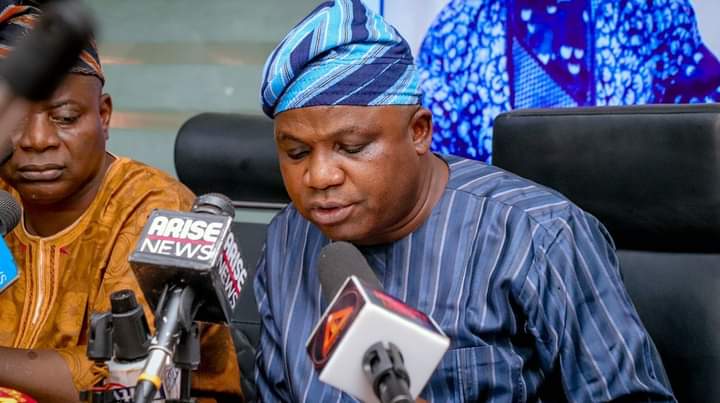
NewsCick Nigeria gathered that within the APC, the atmosphere is anything but calm. The party that once prided itself on unity is now a web of competing interests, bruised egos, and subterranean alliances.
An insider described the APC Guber race in Osun as “the unwieldy field” — a crowded race of 13 governorship aspirants, each flying personal banners and nursing private grievances. From career politicians to technocrats and political returnees, the growing list has turned the party’s preparatory meetings into a noisy marketplace of ambition. With no clear direction from the national secretariat, several aspirants are already building parallel structures, holding separate consultations, and leaking sensitive party intelligence to external actors in desperation to outmaneuver rivals.
For the so-called “Kingmakers” — the small circle of elders, financiers, and political ‘destiny shapers’ expected to prune the field — the situation is becoming a nightmare. A senior party elder told NewsCick Nigeria in frustration, “Everyone thinks they can be governor, but if this crowd isn’t managed with wisdom, we won’t just lose the ticket — we may lose the party itself.” The fear is that the coming primaries could trigger a major implosion, leaving behind bitter factions and defections that might hand victory to the opposition before the first ballot is even cast.
The Osun APC chairman, Hon. Tajudeen Lawal Olaniyi who said he was in a meeting when NewsCick Nigeria called for comments has yet to neither return subsequent calls nor respond to text messages.
However, findings by NewsCick Nigeria indicate that the All Progressives Congress (APC) in Osun State, especially as it relates to the Central Senatorial District (as per Osogbo constituency), is now clearly divided along two visible political tendencies — each quietly shaping the battle ahead of the 2026 governorship race.
The K-RAD Movement:
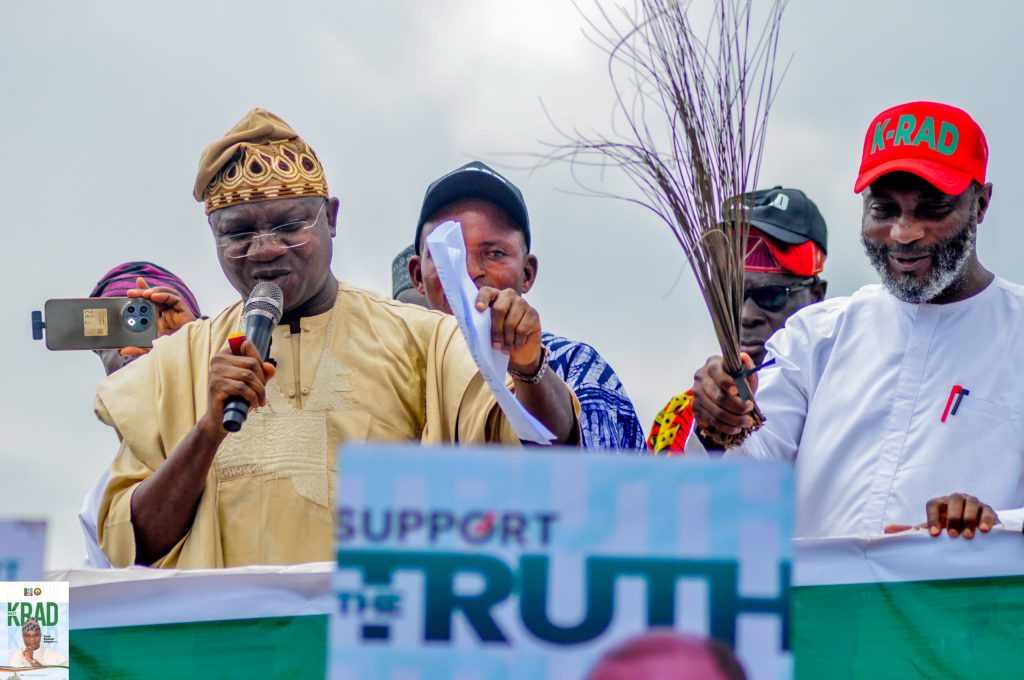
At the forefront is the swelling base of Kunle Rasheed Adegoke (K-RAD), an Osogbo-born Senior Advocate of Nigeria (SAN) whose spotless public image and unwavering loyalty have made him the moral compass of the Osogbo agitation. To his supporters, K-RAD represents the convergence of “justice for Osogbo” and “credibility for APC.” They insist that after decades of political servitude, only his emergence can give the party both ethical depth and electoral strength. Any attempt to sideline him, they warn, will be read as another betrayal of Osogbo’s long-denied aspiration.
“The first salvo for Osogbo L’okan mantra was fired by our father and Chairman of the Osogbo Elders Council, Prince Adeleke Oduola Ibiloye and expectedly the entire town felt that impulse and bought into the agenda. That tells of a town that has rallied others for over 30 years now demanding that they also take the front role in governance. I believe as a proud son of the soil, after over 20 years of supporting our great party and rendering countless legal services pro bono, I can be trusted with that onerous job of lifting the glory of our dear state again,” K-Rad noted in an interview with this medium.
The SRJ Network:
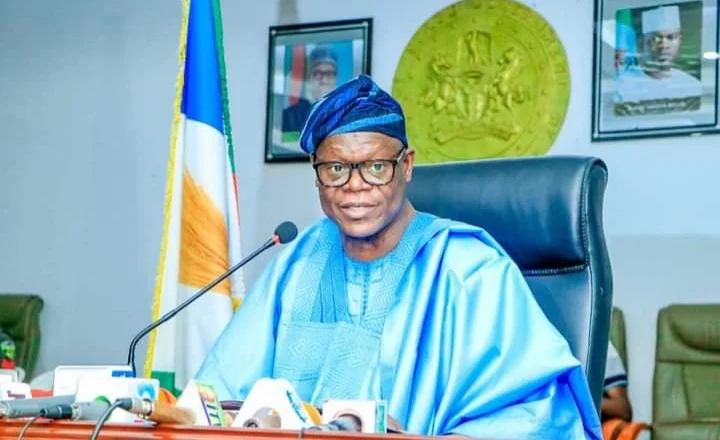
On the other side of the divide stands Senator Ajibola Basiru (SRJ), the current National Secretary of the ruling APC and a calculating strategist with a far-reaching network. Sources confided in NewsCick Nigeria that SRJ is allegedly exploring a shock realignment — one that could see Governor Ademola Adeleke defect to the APC ahead of the primaries. The plan, viewed by many as both audacious and divisive, is fueling disquiet among party loyalists who see it as an affront to Osogbo’s collective struggle for fair representation.
While efforts to reach Basiru was unsuccessful as at press time, however, a close ally of his who spoke on condition of anonymity told NewsCick Nigeria that the APC National Secretary couldn’t have been pushing for Governor Adeleke’s defection to his party when he (Adeleke) had only recently pledged loyalty to the PDP.
“How can they say Basiru is lobbying for Adeleke’s move to the APC when the governor only recently cleared the air that he is not leaving the PDP? That is not true. From all I know, Basiru is also interested in the governorship ticket of the APC. His political group, ‘The Alubarika Movement’ is active in Osun advocating for his candidacy,” he said.
Meanwhile, hovering at the periphery of these two power tendencies, is the Lekan Badmus circle — a small but ambitious faction reportedly angling for the deputy governorship slot. Led by the Nigerian Ports Authority’s Executive Director, Lekan Badmus, the move has drawn sharp criticism across Osogbo, where many dismiss it as a betrayal of the city’s larger political interest. Repeated calls and text messages to Badmus’ phone by NewsCick Nigeria for comments were unreturned as at press time.
Sensing a possible clash of interest, another senior APC insider told this medium that if political titans do not manage their ego and play like seasoned sportsmen, the APC seeking to yank power from the PDP might end up gifting them another term.
“If Osogbo is ignored again, the APC may hand over Osun to the opposition. There’s anger in the grassroots, and even Tinubu’s name won’t save anyone this time.”
Adeleke’s “Ede-First” Politics and the Ripple Effect
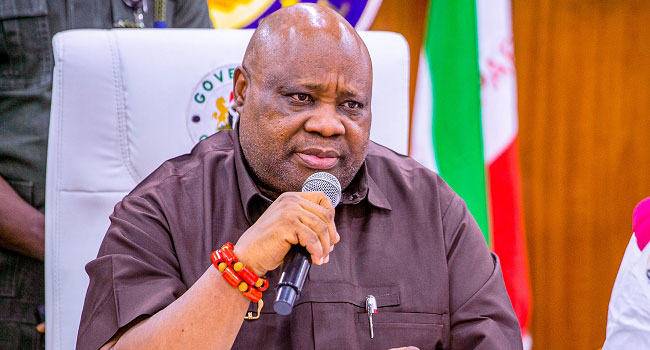
While APC grapples with internal friction, Governor Ademola Adeleke of the PDP has his own image problem — what critics now call “Edenization” of governance. According to the critics, the governor’s ambitious urban renewal projects, though laudable, have been concentrated largely in his hometown of Ede.
They explained that from road dualizations to public appointments, the tilt toward Ede has become impossible to ignore. Civil servants in Abere (the Seat of Power) whisper that many top postings now carry a quiet prerequisite: “Are you from Ede?”
“Every state resource now seems to pass through one family pipeline,” lamented a senior civil servant who requested anonymity. “It’s like Osun is being rebranded as the Republic of Ede,” one of the critics who confided in NewsCick Nigeria said.
However, Governor’s Adeleke’s spokesman and Special Adviser, Mallam Rasheed Olawale in a phone interview with NewsCick Nigeria denied the alleged mass concentration of projects in Ede. According to him, so far projects executed by the Adeleke administration reflect statewide spread with Ede sometimes getting least.
“The vague lies of project concentration at Ede should be out of fashion by now. Opposition should invent another lie. I can tell you for a fact that since the inception of this administration projects have always been executed in a manner that covers all the federal constituencies and local governments. All the 30 Local Governments and their respective Local Council Development Areas have all felt a touch of the Adeleke administration. So far, this administration has constructed over 250 kilometers of roads, rehabilitated over 200 health centres, upgraded over 100 schools, purchased 31 tractors for mechanization and constructed three flyover bridges all evenly distributed,” he said.
The Mosque, the Market, and the Mandate

NewsCick Nigeria gathered that unlike past political agitations driven by elites, the “Osogbo L’Okan” movement is communal and organic. In major mosques across Oke-Fia, Alekuwodo, Sabo and Isale-Osun, Islamic clerics now weave political awareness into sermons. Women’s cooperatives and traders’ unions have begun pooling funds for political education. Even secondary school teachers discuss zoning at staff rooms.
Mrs. Ramota Agboola, a pepper seller at Owode Market, put it simply:
“They used to tell us Osogbo is only good for votes. This time, our votes will speak for Osogbo.”
It’s a sentiment resonating even among younger voters, many of whom see 2026 as a referendum on identity rather than party.
Tinubu’s Dilemma — and 2027 in the Shadows
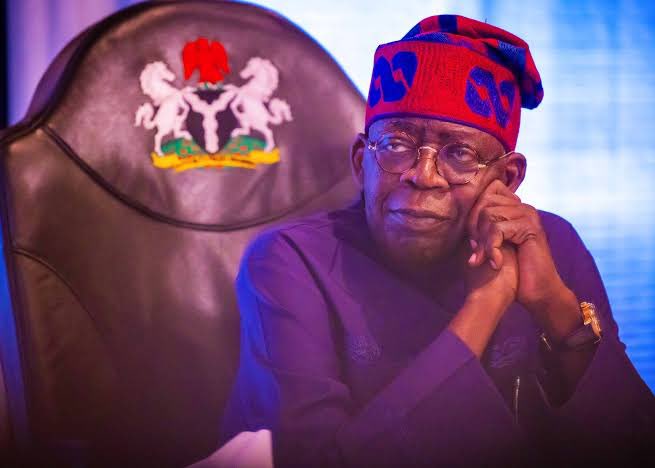
For President Bola Ahmed Tinubu, Osun’s 2026 election is not a state issue; it’s a stress test for his political machinery. Two consecutive defeats in Osun would not only bruise the APC’s Southwest base but also threaten Tinubu’s 2027 re-election momentum.
“The President cannot afford another Osun loss,” said Dr. Sunday Adewuyi, a political sociologist at Obafemi Awolowo University. “But the irony is, the key to victory is not in Lagos or Abuja — it’s in Osogbo. If he fails to read that mood right, the ripple could reach the Villa.”
The Road to August 2026
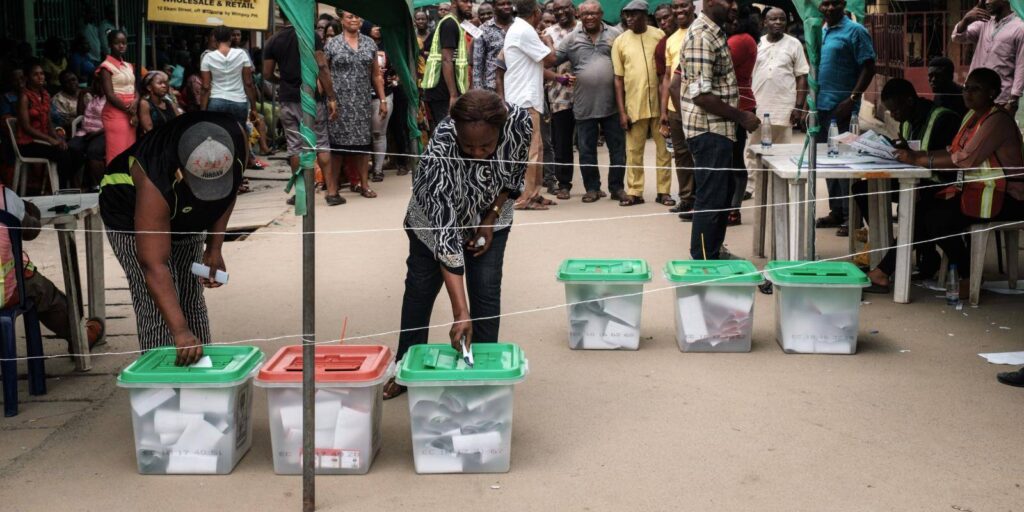
As the calendar inches toward August 2026, the field is taking shape: a restless Osogbo bloc ready to assert itself, an APC struggling to stay cohesive, an Adeleke administration battling perception problems, and a rising ADC seeking its first big national moment.
In the words of a youth leader from the Coalition for Osogbo Equity:
“We are not fighting anyone. We are simply saying: enough is enough. If Osogbo can’t govern Osun after 34 years, then democracy means nothing here.”
That statement captures the pulse of a city no longer content to host the government — but determined, this time, to run it.
And as the night settles over Osogbo’s glowing roundabouts and the call to prayer echoes from Oja-Oba, one message rises above the noise of politics. Osogbo L’Okan — is not just a slogan, but a reckoning.”
