

Artificial Intelligence (AI) is quietly but steadily reshaping Nigeria’s labour market, transforming how people work across sectors such as banking, media, telecommunications, retail, and education.
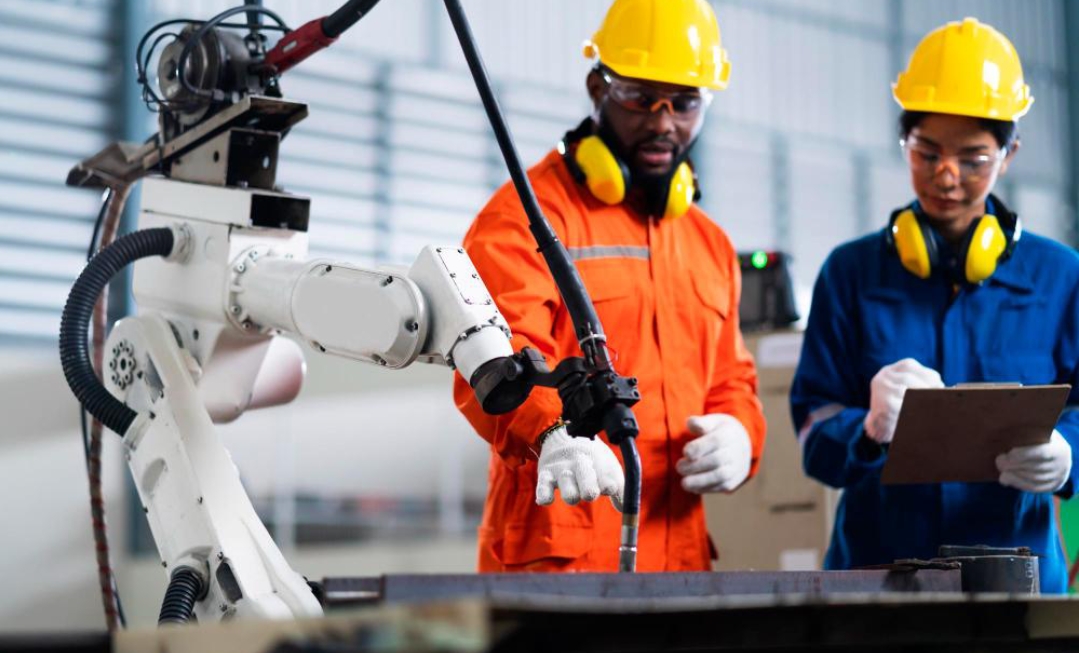

While the technology is creating new opportunities, it is also redefining traditional roles and raising concerns about job displacement and skills readiness.
Across major cities like Lagos and Abuja, businesses are increasingly adopting AI-powered tools to improve efficiency, reduce costs, and automate routine tasks. From customer service chatbots to fraud detection systems in banks, AI is becoming an invisible but powerful part of daily operations.
Automation Reshaping Routine Work
One of the most immediate impacts of AI in Nigeria is the automation of repetitive and entry-level tasks. In the banking and telecom sectors, AI chatbots now handle a large share of customer inquiries, reducing the need for large call centre teams.

Similarly, administrative functions such as data entry, scheduling, document processing, and basic reporting are increasingly being handled by AI tools. This shift is gradually reducing demand for some clerical roles, particularly those that involve predictable and structured tasks.
However, industry experts note that this does not necessarily translate into mass job losses. Instead, many roles are being restructured, with human workers moving into supervisory, analytical, and customer experience-focused positions.
Media and Content Creation Undergoing Change
The media industry is also experiencing significant disruption. AI tools are now used to assist journalists in drafting reports, summarising documents, transcribing interviews, and generating headlines.
In some newsrooms, AI systems help editors identify trending topics by analysing audience engagement patterns in real time. This allows faster news production and more targeted content delivery.
Despite these efficiencies, media professionals emphasise that AI cannot replace core journalistic values such as verification, investigative reporting, ethical judgment, and contextual storytelling. Rather, it is becoming a support tool that enhances productivity.
Fintech, Banking and Fraud Detection
Nigeria’s fast-growing fintech sector is among the biggest adopters of AI technologies. Machine learning systems are being used to detect fraudulent transactions, assess credit risk, and personalise financial services for customers.
Mobile banking applications now rely heavily on AI algorithms to analyse user behaviour and detect unusual activity within seconds. This has improved security but also reduced reliance on manual monitoring teams.
Fintech companies argue that AI is helping to expand financial inclusion by making services faster, more accessible, and more secure for millions of users.
Emerging Jobs and New Skill Demands
While AI is transforming existing jobs, it is also creating new categories of employment in Nigeria’s digital economy. There is growing demand for professionals with skills in data science, machine learning, cybersecurity, cloud computing, and AI system training.
Other emerging roles include AI product managers, data analysts, automation specialists, and prompt engineers who help design and optimise AI systems.
Tech hubs and training programmes in cities such as Lagos, Abuja, and Port Harcourt are increasingly offering courses aimed at preparing young Nigerians for these emerging opportunities.
Skills Gap and Workforce Challenges
Despite the opportunities, Nigeria faces a significant challenge: a widening digital skills gap. Many workers in traditional sectors lack the technical training required to transition into AI-driven roles.
Education experts warn that without large-scale investment in digital literacy and technical training, a portion of the workforce could be left behind as automation accelerates.
Stakeholders are calling for stronger collaboration between government, universities, and the private sector to integrate AI and digital skills into national education and workforce development strategies.
The transformation driven by Artificial Intelligence is already underway in Nigeria’s workplaces. While it is improving efficiency and opening new economic pathways, it is also reshaping long-established job structures. The direction of this shift will depend largely on how quickly institutions and individuals adapt, reskill, and position themselves within an increasingly digital economy.
