

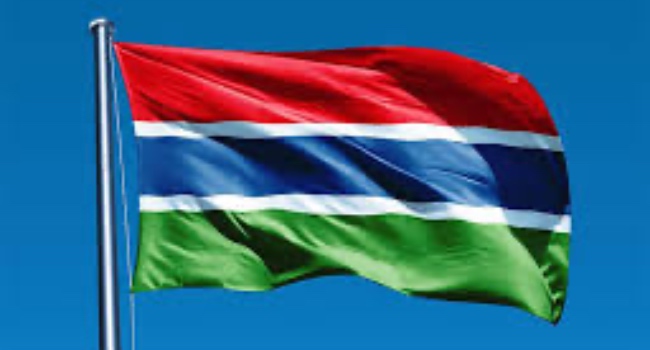
The Gambia will hold its next presidential election on 5 December 2026, officials announced on Thursday, amid growing criticism of President Adama Barrow’s decision to seek a third term.
Barrow surprised many Gambians earlier this year when he declared his intention to contest again. Although the 1997 Constitution permits a third term, the move had not been anticipated.

When Barrow came to power in 2016, it was widely believed that The Gambia would adopt a new constitution introducing presidential term limits. However, in 2020, lawmakers loyal to him rejected a draft constitution that included a retroactive clause limiting presidents to two terms — a clause that would have barred Barrow from running again.
Four years later, the government introduced another draft constitution, removing the controversial clause, but lawmakers rejected it again in July 2024.
Barrow’s decision to run under the banner of his National People’s Party (NPP) has drawn criticism both domestically and internationally. The Gambia’s main opposition group, the United Democratic Party (UDP), last month named veteran politician Ousainou Darboe as its presidential candidate.
Despite the backlash, Barrow remains the favourite to win the 2026 poll, as opposition parties have yet to form a united front capable of challenging him.
Announcing the election schedule, Joseph Colley, Chairman of The Gambia’s Independent Electoral Commission (IEC), said the presidential vote would be held on 5 December 2026, followed by parliamentary elections on 10 April 2027.
Colley reaffirmed the IEC’s commitment to “transparency, inclusion, and adherence to electoral laws” and urged political parties to meet registration requirements.
The December election date aligns with the country’s established electoral calendar under the current constitution, which dates back to 1997. That constitution enabled former ruler Yahya Jammeh to entrench his autocratic rule after seizing power in a 1994 coup.
Jammeh’s 22-year regime was marked by widespread human rights abuses and allegations of massive corruption, including the diversion of state funds for personal use. He fled to Equatorial Guinea in 2017, after losing the election to Barrow, then a political newcomer, and eventually agreed to hand over power.