

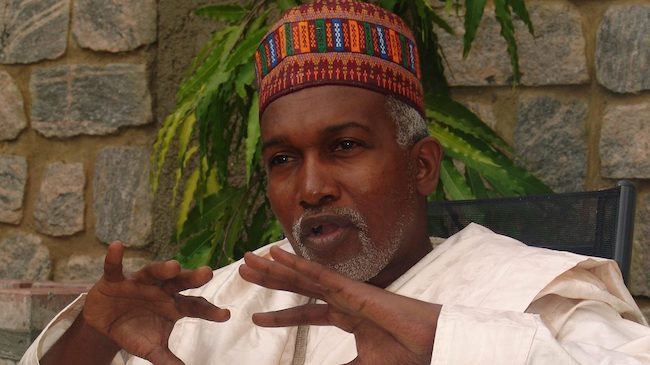
Former Minister of Foreign Affairs, Yusuf Tuggar, has linked the growing wave of banditry and insecurity in Bauchi State and other parts of the country to what he described as an imbalance in land use between farmers and herders.
Tuggar made this known on Sunday while speaking with journalists as he outlined his priority areas ahead of his governorship ambition in the state.

He stressed that pastoralism should not be regarded as outdated, noting that it remains a legitimate and long-established way of life practised even in developed countries.
According to him, “Transhumance is a way of life and is not incompatible with modern societies. Pastoralists exist in advanced countries, so it is not a sign of backwardness.”
The former minister called for the modernisation of pastoral and agricultural systems, including the proper development and management of grazing routes and reserves.
He explained that population growth and the encroachment on grazing areas have intensified conflicts between farmers and herders.
Tuggar also cautioned against the indiscriminate allocation of vast farmlands to individuals who fail to utilise them effectively, noting that such practices often displace subsistence farmers and strip them of their livelihoods.
“When people are disenfranchised and can no longer sustain themselves, they may resort to banditry or other criminal activities,” he said.
He advocated a balanced approach that safeguards the interests of both farmers and herders, urging collaboration with traditional institutions and local authorities to address the issue.
Tuggar further emphasised the need to uphold constitutional provisions that prioritise citizens’ welfare, warning against governance that benefits only a select few.
On pensions and gratuities, he noted that delays or non-payment contribute to social instability, as affected families may be pushed into crime.
He said ensuring timely payment of retirees’ entitlements would be a key priority if elected.
“It is critical for the survival of individuals and for maintaining social stability. When families are neglected, insecurity can grow,” he added.
Tuggar identified agriculture, mining, and business process outsourcing as key sectors for job creation and poverty reduction, noting that improved productivity, investment in local processing, and digital skills development could provide opportunities for young people.
Drawing comparisons with global examples, he pointed out that countries like India have successfully used outsourcing to generate employment, urging similar strategies to harness Nigeria’s youthful population.
He maintained that inclusive economic policies and fair land use would be vital in addressing insecurity and driving sustainable development.
