
[Special Report]: How Nigerians are redrawing map of home, work, opportunity through reverse migration

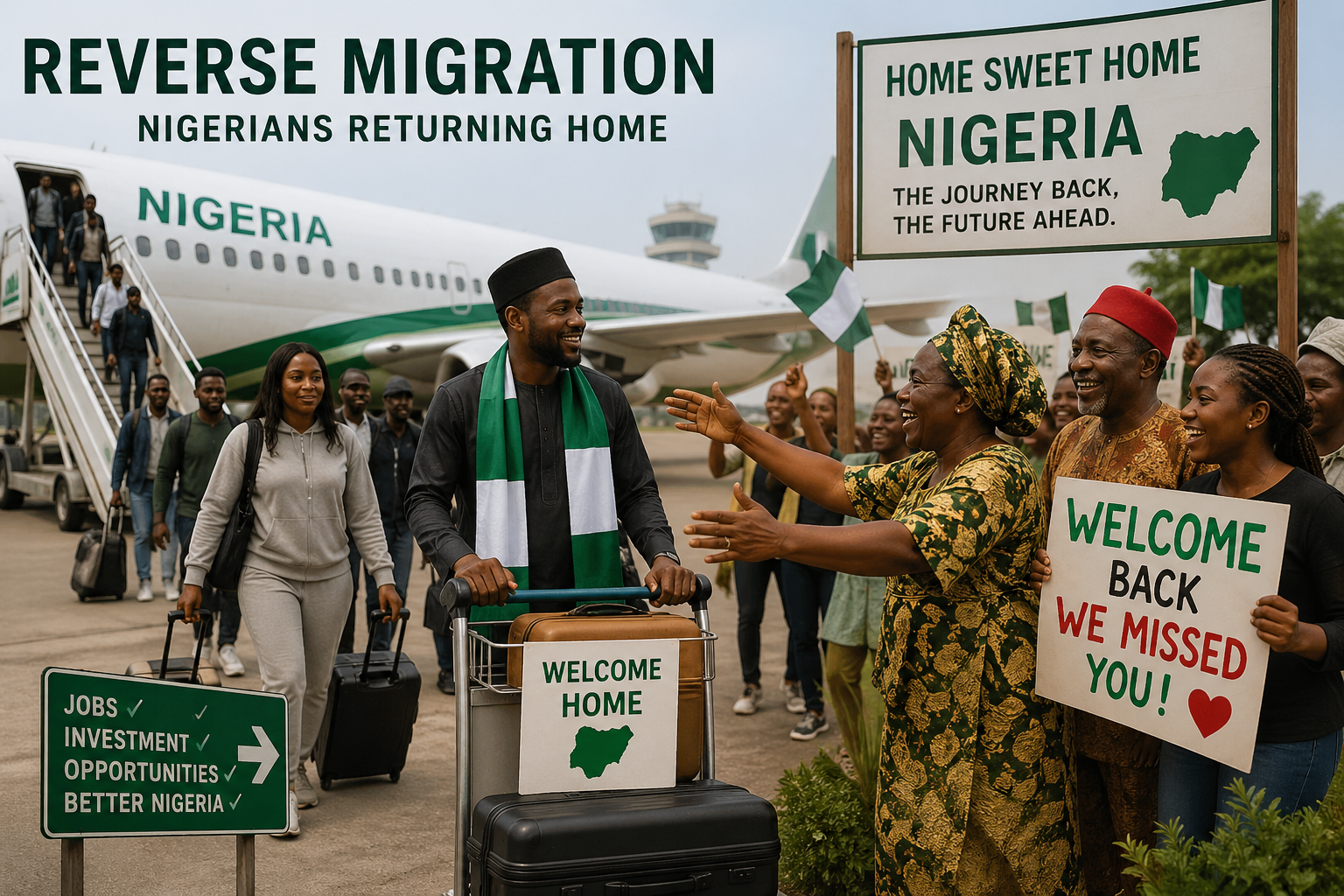
Across Nigeria, a quiet but powerful shift is underway. The long-standing expectation that success lies in Lagos or beyond the country’s borders is being challenged by a growing wave of reverse migration.
Professionals are leaving global cities, families are relocating from congested urban centres, and individuals are returning to smaller towns in search of affordability, stability, and a deeper sense of belonging.

What was once a one-directional journey—rural to urban, local to international—is now more fluid. Nigerians are increasingly moving back and forth across places, weighing opportunity against cost, and ambition against wellbeing.
Research supports this evolving pattern. According to a 2021 survey titled ‘Internal migration trends in Nigeria’ conducted by the International Organisation for Migration (IOM) Nigeria, internal migration is rural-urban movement, fueled by searches for better economic opportunities, education, and safety from regional insecurity. Urbanization has increased from 16% in 1960 to nearly 50% as of the 2020s, creating immense pressure on infrastructure in cities like Lagos, Abuja, and Port Harcourt.
Studies also show that migration is no longer a permanent shift but often a cyclical process, with individuals maintaining strong ties to their places of origin and moving multiple times across their lives.
For many, the decision is deeply personal, shaped by family needs, financial realities, and changing priorities.
NewsClick Nigeria spoke to some Nigerians recently caught in the web of Japa (a local parlance for describing the rapid emigration of Nigerians, especially youths, to other countries in search of better opportunities) and those migrating across town and cities and their responses was captured below:
“Lagos Was Too Expensive to Sustain” — The Ibadan Move
For Mr Adewunmi Adams, leaving Lagos for Ibadan was a decision rooted in financial pressure and family wellbeing.
“The major reason was the high cost of living in Lagos,” he explains. “Rent, feeding, transportation—it was taking a big part of my income.”
While Lagos offered more opportunities, survival had become difficult. In Ibadan, life became calmer and more affordable.
“My cost of living reduced significantly. My family is more relaxed now.”
However, he admits the trade-off is real: fewer business opportunities compared to Lagos. Still, he has adapted by shifting part of his work online, improving stability and reducing pressure.
“A Quieter Life, But a Restart Was Needed” — The Osun Experience
For Mrs Odunayo, moving from Lagos to Osun State was about escaping constant financial strain.
“Lagos became too expensive and stressful,” she says. “I wanted a quieter and more stable life.”
While Osun offers peace and lower costs, she notes that opportunities are fewer. The biggest challenge was rebuilding her social and professional network from scratch.
“I had to start over, but life is more peaceful now.”
Her experience reflects a common trade-off: stability versus exposure.
Work-Driven Movement Within Nigeria
Not all relocations are about escaping hardship. For Mr Olamide, moving from Lagos to Ogun State was driven by employment at the Federal Medical Centre in Abeokuta.
Commuting from Lagos was unsustainable, forcing a permanent relocation to Ogun State.
“Life in Lagos was fast and expensive. Ogun is calmer and more affordable.”
What began as a job relocation eventually became a life transition—he met his wife and built a new home in Ogun.
“My career improved, my savings increased, and my life became more stable.”
“Spread Your Wings Where Growth Is Possible” — Akure Perspective
For Mr Rotimi Dotun, a real estate professional, leaving Lagos for Akure was strategic.
“In Lagos, competition was toxic. I wasn’t getting what I needed.”
In Akure, he found breathing space to rebuild.
“I was able to spread my wings. My business improved.”
His message is clear: relocation is not retreat—it can be repositioning.
“If a place limits your growth, move.”
Ekiti–Osun Migration: Opportunity vs Cost Balance
For Adebayo Adetola, moving from Ekiti State to Osun was driven by job opportunity and connections.
“My income improved, and I met people who impacted my life positively.”
Meanwhile, another migrant, Ayomide Surprise, who moved from Osun to Ekiti, highlights a different reality:
“Life is more affordable and peaceful, but job opportunities are fewer.”
Both experiences show a recurring truth: migration is a balance sheet of gains and losses.
From Abroad Back Home — The UK Return Story
For Mr Abbey, returning from the United Kingdom to Nigeria was not about lifestyle, but business survival.
“My business needed my physical presence. Things were not being handled properly from abroad.”
While the UK offered structure and predictability, Nigeria offered control and opportunity.
“Since returning, I’ve improved operations and increased revenue.”
But the emotional cost was real—family separation and cultural readjustment came with the move.
Ogun State: Where Movement Becomes Settlement
For Ajewole Kolade, relocating from Lagos to Ogun State was about reducing pressure and gaining family support.
“The cost of living is lower and life is more relaxed,” he explains.
However, job scarcity remains a challenge, forcing adaptation and new income strategies.
Still, he concludes that the move was worthwhile depending on individual circumstances.
The Bigger Picture: A Nation Rethinking Mobility
Across all narratives, a pattern emerges: reverse migration in Nigeria is not random—it is strategic, economic, and deeply personal.
Urban centres like Lagos still dominate in opportunities, but they are increasingly weighed down by cost and stress. Meanwhile, cities like Ibadan, Akure, and states such as Ogun, Osun, and Ekiti are becoming viable alternatives for those seeking balance.
Even international returnees are reshaping this trend, bringing skills, capital, and experience back into local economies.
Reverse migration is redefining what it means to “move forward.”
For some, it is about escaping financial pressure. For others, it is about career growth, family unity, or reclaiming control over business and life. But for all, it represents a shift in mindset: success is no longer tied only to where you go—but to where you choose to stay.
As one respondent puts it simply:
“Comfort is not everything. Growth matters more.”