

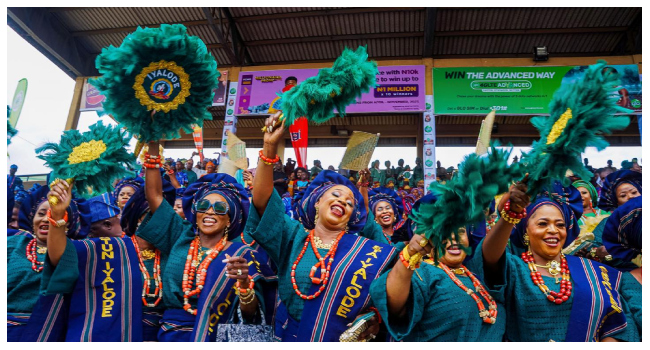
The festival is often described as a unique blend of royalty, culture, fashion, history, and community pride, making it one of the most visually spectacular events in Nigeria.

Facts about the Festival:
It is a famous Yoruba cultural festival
Ojude Oba is one of Nigeria’s most celebrated cultural festivals, held by the Ijebu people in Ijebu-Ode. The name “Ojude Oba” means “The King’s Forecourt.”
It honors the Awujale of Ijebuland
The central purpose of the festival is to pay homage to the traditional ruler of the Ijebu people, the Awujale.
It is held after Eid al-Adha
The festival takes place annually on the third day after Eid al-Kabir (Eid al-Adha), making it closely linked to Islamic celebrations in Ijebuland.
It began as a Muslim thanksgiving gathering
Historical accounts trace its origin to Muslim converts who gathered to thank the king for allowing them to practice their faith freely. Over time, it evolved into a major cultural event.
People of all faiths now participate
Although it started as a Muslim event, Ojude Oba today brings together Muslims, Christians, and traditional worshippers in a celebration of unity and heritage.
The Regberegbe age groups are a major attraction
Organized age-grade groups known as Regberegbe parade in coordinated outfits, dance, and present gifts to the king. Their displays are among the festival’s highlights.
The horse-riding parades are legendary
Descendants of historic warrior families, known as Balogun families, ride decorated horses in spectacular processions that draw huge crowds.
Fashion is a big part of the festival
Ojude Oba is famous for its stunning traditional attire, especially luxurious aso-oke fabrics, elaborate headgear, jewelry, and coordinated family outfits.
It attracts visitors from around the world
Thousands of visitors, including members of the Nigerian diaspora, tourists, celebrities, and dignitaries, travel to Ijebu-Ode each year for the celebration.
It has become a symbol of Ijebu pride
Beyond the festivities, Ojude Oba promotes Yoruba culture, strengthens community ties, supports local businesses, and showcases the rich heritage of the Ijebu people to a global audience.
